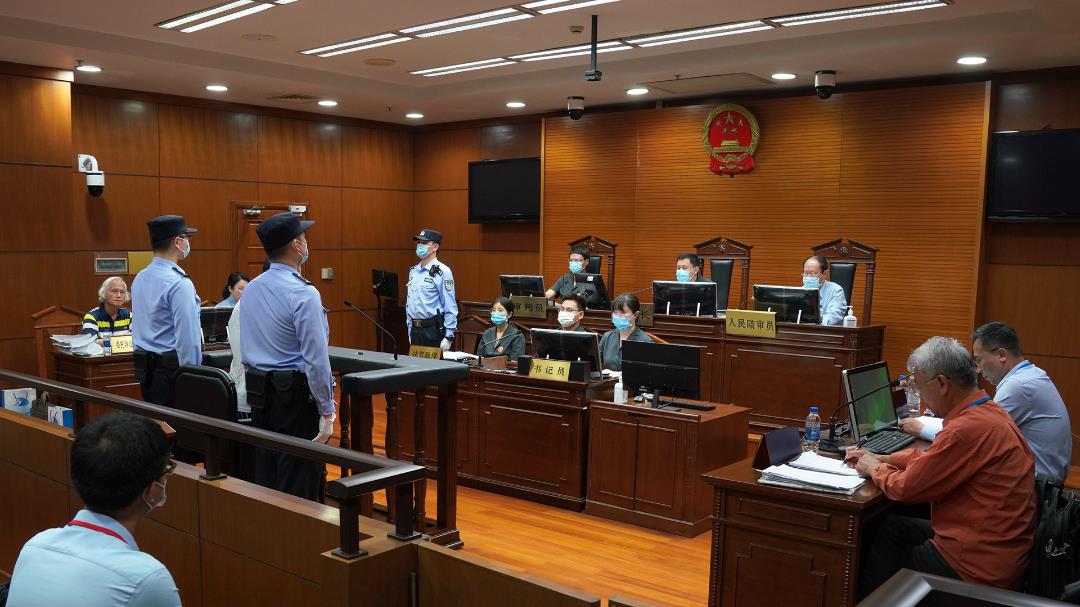
Agitation and resistance
Sidelights on the Development of Rock Music in Xi ‘an
Text | hammer
01
Writing the rock history of any China city is inseparable from its birthplace: Beijing. From a historical point of view, Beijing represents the center of Chinese rock and roll, from which rock and roll radiates to other cities, thus forming an influence. The first Chinese rock band recognized by the industry was Wan Li Ma Wang, which was founded in Beijing Foreign Studies University around 1980. It mainly covered the works of The Beatles and other established bands, and this year was considered as the first year of Chinese rock.
The word "Wan Li Ma Wang" seems to have nothing to do with it, but the source is quite interesting: the band members heard that there was a swift horse in North Korea, and several people’s surnames were just Wan, Li, Ma and several kings, covering it, so Wan Li Ma Wang Band was established.
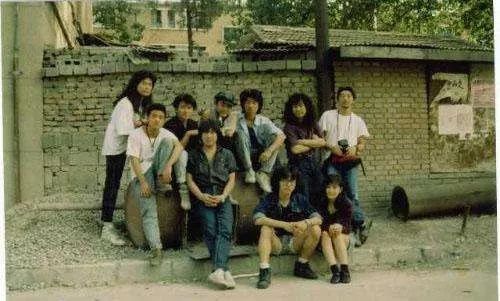
Strictly speaking, "Wan Li Ma Wang" bears the imprint of a campus band, and only a handful of performances were performed in the school. At that time, people’s understanding of literary programs was still in the period of recitation, solo and chorus, and such a band excited the teachers and students of the school. Before the wish of performing outside the school came true, the band broke up. What’s more, it’s a pity that the band didn’t leave any information.
This is not so much Chinese rock music around 1980 as it is just Beijing rock music. Before 1985, the word "rock and roll" was still blank in Xi ‘an, and only some people came into contact with European and American music sporadically. At that time, most of the channels for contacting European and American music came from the staff and relatives of the government and multinational companies. Although Beyond Band in Hong Kong was established as early as 1983, it did not have much influence on rock music in the Mainland. At this stage, people who come into contact with rock music (European and American music) in Xi ‘an can’t be counted specifically. People who are familiar with rock music in Xi ‘an firmly believe that the time when rock music appeared in Xi ‘an does not lag behind Beijing and other places.
According to Ali, the lead singer of the Xinjiang band "Return" who came to Xi ‘an for development, Xu Fei of Xiying Factory was the representative of the early Xi ‘an rock music. Xu Fei, a singer, went to Shenzhen for development in 1985. In 1986, he published China’s first rock album "Rock Night on Rock Station". This album has no data to check, and it has not been mentioned in the history of Chinese rock. Whether it is China’s first rock album remains to be discussed. Ali recalled that in 1983 or 1984, in a film co-produced by Xi ‘an Film Studio and Inner Mongolia Film Studio, I saw pictures of several bands, which were said to be the electro-acoustic bands of Xi ‘an Xinlei Orchestra.
In 1986, Cui Jian formed the seven plywood Band and published the first album "The Prodigal Son". Today, this is an album full of Taiwanese folk songs in the 1980s, which has nothing to do with "rock". At that time, Cui Jian was just 25 years old, and her pronunciation was clear and her voice was smooth, which was totally different from what she is now. Many people who heard this album for the first time were surprised by the sound changes before and after Cui Jian.
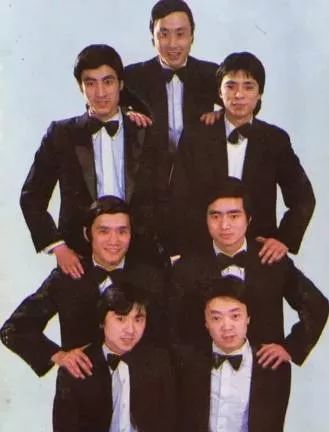
In 1986, Teresa Teng became a household name, which reflected people’s enthusiasm for new things at that time. More young people wore long or semi-long hair and permed their hair. It was fashionable to have a Sanyo tape recorder, wear jeans (bell bottoms) and dance in break dancing. The word "rock" began to appear among some young people, and electro-acoustic bands began to appear in the song and dance troupes in the country since the age of acupuncture. "Going to the cave", a legendary word, is extremely important in the history of rock music, but few people talk about it. At that time, there were many specific words closely related to rock music, which became the special jargon that people connected with each other in the performance market at that time. The performance is called "going to the cave", the labor fee is called "blocking the pestle", and the organizer is called "the head of the cave", and there are also different classifications of "the cave". Those who don’t get the money are called "the water cave" and those who are particularly popular are called "the fire cave".
It was a special era. The reform and opening up achieved initial results, the economy expanded rapidly, the people’s material life improved, there were more requirements for cultural life, and the performance market was unprecedentedly prosperous. Most rock people who have experienced that era have the impression that they earn a lot of money. Many well-known bands and musicians have gone through the cave: Tang Dynasty, Panther, Xu Wei … This is also the enlightenment era of Chinese rock, and the "seven plywood" composed by Cui Jian and Liu Yuan and the "tumbler" composed by Sun Guoqing and Cang Tianshuo have become famous. In 1986, Cui Jian sang "Nothing" at the "Concert of 100 Singers to Commemorate the International Year of Peace" held in Beijing, which influenced the national rock music of that era, including Xi ‘an.
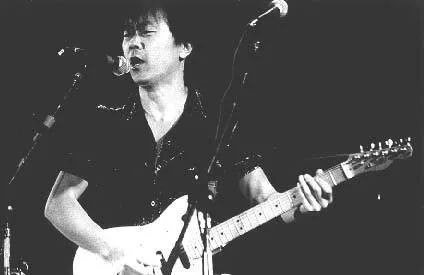
Zhang Chu was unknown at that time. He tried to write his own songs when he was a student. It is said that "Going out to Yang Guan in the West" was completed in those years. In 1987, Zhang Chu, who studied in the Department of Civil Engineering of Shaanxi Mechanical Institute (now Xi ‘an University of Technology), dropped out of school and went to Beijing to develop alone, and soon published his first album. In 1991, Sister became one of the most important songs in Chinese rock music.
Zhang Chu is one of the indispensable keywords of rock music in Xi ‘an. At present, there are few systematic and complete information about this lonely rock singer. It is not impossible to piece together past information and interviews, but does anyone really care about the story behind a singer? The answer must be: not necessarily.

In 1988, Northwest Wind released by China Record Shanghai Company was born, which shocked a generation, with Fan Linlin’s My Hometown in Love, Cui Jian’s Nothing, Hang Tianqi’s Loess Plateau and Xintianyou as the most prominent ones, and was regarded as the "rock music" of that era. Cui Jian’s performance in Seoul Olympic Games was broadcast on CCTV, and rock music further appeared in Xi ‘an people’s field of vision. In the same year, the first truly recorded rock band in Xi ‘an, Instant Band, was established (later renamed Impact Band), with lead singers Fanny, guitar Xu Dongpo, bass Song Baoli and eight pounds keyboard. The members of the band have been active in the rock list of Xi ‘an in the following years. The appearance of this band has led a large number of people to embark on the road of musicians, spontaneous dances have become the stage of the band, and more people have begun to learn musical instruments. Many of these bands and musicians later participated in the nationwide acupuncture activities.
Rock on the New Long March released by Cui Jian in 1989 became the first rock album recognized in the history of Chinese rock. Although not many people have heard of this album, Cui Jian has become a "rock star" at that time (most people know Cui Jian but have never heard of Cui Jian’s songs, because the history of this album version is very complicated. The Hong Kong version and the Taiwan Province version were released by China Tourism Audio-visual Publishing House, and the other version was released by EMI Hong Kong Company and Koden Company in Taiwan Province. After that, EMI in Japan and Koden in Taiwan Province released the Japanese version and Koden republished it respectively. At that time, "Nothing" was also covered by many singers such as Liu Huan and Sun Guoqing, and it spread very fast. The enlightenment of many rockers is not so much Cui Jian as the song "Nothing". In 1990, Cui Jian came to Xi ‘an to perform. The audience was mostly college students, and everyone applauded with the singing. Cui Jian influenced more people and made them take the road of rock music.

In 1991, the East Lion Orchestra was established, and its members changed several times, becoming one of the most well-known names among the older generation bands in Xi ‘an. In the same year, China Fire 1 was released. The first song was Sister by Xi ‘an singer Zhang Chu. This album inspired more people to form a band. The band of the Tang Dynasty and Black Panther band released albums one after another, and rock music formed a camp, and then the number of dances in Xi ‘an increased significantly, and musicians began to popularize.

In 1992, the Flying Band was founded, with lead singer Xu Wei and guitar Takamatsu as its core members. There are bassist Tong Tong, keyboard player Ba Jin and drummer Zhang Laosan, which are considered as the best musicians in Xi ‘an at that time. At the same time, many musicians did not give up the point, and often traveled between Xi ‘an and other places. Most bands were not formal. At the end of 1993, the first performance of Fei Band in Xi ‘an International Studies University caused a sensation. The theater of 1,000 people was packed with 3,000 spectators, and the band performed five works. In February 1994, the Flying Band went to Chengdu to perform, which was very sensational. After the performance, it was interviewed by Chengdu Radio and major newspapers and magazines. In July 1994, Fei Band went to Yinchuan to attend the Northwest Rock Festival, and performed in Yinchuan Gymnasium with three other bands from Lanzhou, Ningxia and Inner Mongolia. The excellent finale performance attracted the attention of local media, and the live recording of the performance and the exclusive interview with the band were broadcast on Yinchuan Radio. After returning to Xi ‘an, Fei Band accepted a live interview with Shaanxi Literature and Art Station, and the Demo of the band’s songs was also played many times on the radio, which had a strong response. At the same time, Xu Wei began to be a guest at the Literature and Art Station to introduce western rock music.
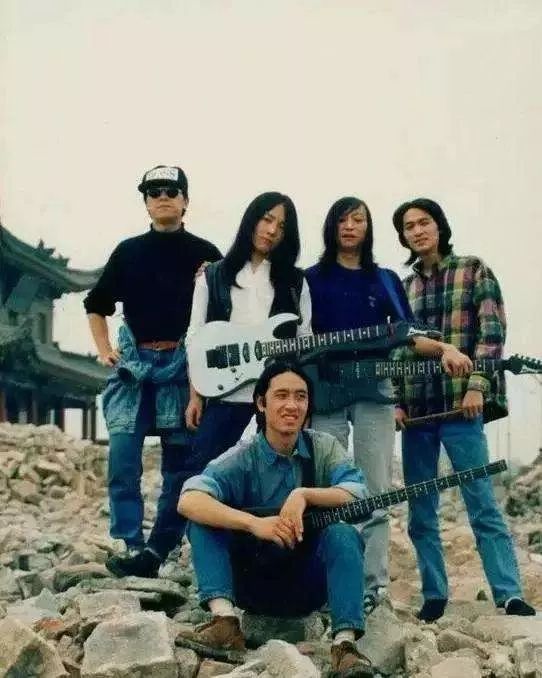
However, the good times didn’t last long, because the band had no financial resources and other reasons, the contradictions among band members began to intensify. Until now, the contradictions among flying bands are still circulating, and there are many versions, which are difficult to distinguish between true and false. In 1994, Xu Wei left for Beijing, and the Flying Band temporarily stopped performing.
02
In those years, Chinese rock records emerged one after another. Apart from band and individual albums, platter became another major form of rock records. Well-known are Red Rock released in 1991, China Fire 1 released in 1992 and Rock Beijing 1 released in 1993. Among them, "Fire in China 1" and "Rock Beijing 1" have become classic records in the rock platter because they contain many famous bands.
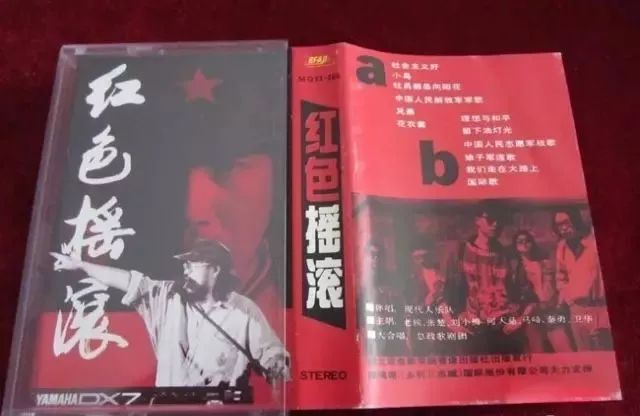
In May, 1994, Zhang Mengmeng, who formed the Black Spider Band in Beijing, left the team and made "Southern Rock-Storm No.1 1994 in Guangzhou" (hereinafter referred to as "Southern Rock No.1"), including three bands in Shenzhen and seven bands in Guangzhou. The Southern Rock 1, which is dominated by Guangzhou Band, seems to be nothing remarkable in Xi ‘an Band, and the rockers in Xi ‘an have the idea of publishing their own works. Indeed, most of the musicians in "Southern Rock 1" are young, with uneven technical level. At the same time, they lack the strong rhythm of northern rock, and the over-commercialized allocation makes Xi ‘an rock people disdain.
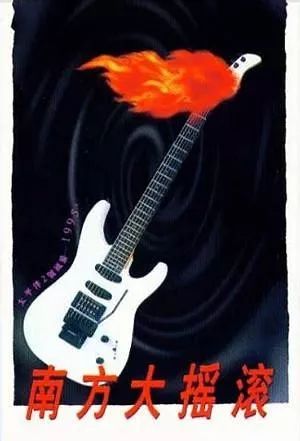
The name "Southern Rock" is also considered by some people to be obviously rival to Beijing Rock, and immediately after its publication, it attracted fierce ridicule and booing from Beijing rock groups, which also led to people’s indifference and disdain for Southern Rock 2 published in 1995.
The opportunity appeared in 1995, when Zhang Yu planned the "Longdu Rock Concert", and the scene was bursting. At the concert, many musicians were performed by this band and then followed by other bands. Guitarist Wu Yixin and bassist Doudou were both musicians of Bo Band, RMB Band and Dust-free Band, drummer Zhang Chi was also the drummer of Xi ‘an Band, Bo Band, RMB Band and Dust-free Band, keyboard player Feng Jiyong was also the drummer of Bo Band and Dust-free Band, and guitarist Xu Dong Po and drummer Chen Jia were also the space. In those years, because of the high requirements of the band, the musicians who made their debut enthusiastically pursued personal skills and rehearsed very seriously, and grew into excellent musicians in Xi ‘an and even China. At the same time, this concert influenced more people to choose to play rock music, which greatly promoted the rock music in Xi ‘an. Subsequently, the idea of Xi ‘an Band publishing their own works became a reality, and "Rock in the West of China" was published on tape, which included the works of all the bands participating in the "Longdu Rock Concert". The bands and musicians appearing in the collection are recognized as the earliest rockers in Xi ‘an. The release of tapes has also promoted the fiery atmosphere of rock and roll in Xi ‘an.
In 1996, musicians spontaneously formed a music alliance, with Gao Song and Xu Dong Po, who were highly prestigious at that time, as the chairmen. At the same time, Gao Song reorganized the flying band and took the lead in holding many performances on campus and in the society. Due to the lack of funds, almost all performances started friends to find performance equipment such as speakers, and many engineering lines needed for performances were done by themselves. This performance lasted for three or four years. Since 1997, Li Quntao has organized foreign bands to perform large-scale performances. The names that often appear on the list are Panther, Tang Dynasty, Overload and Cobra. These Beijing bands frequently perform in Xi ‘an, and Xi ‘an has become another base for them after Beijing. These two years are the first golden age of rock and roll in Xi ‘an.
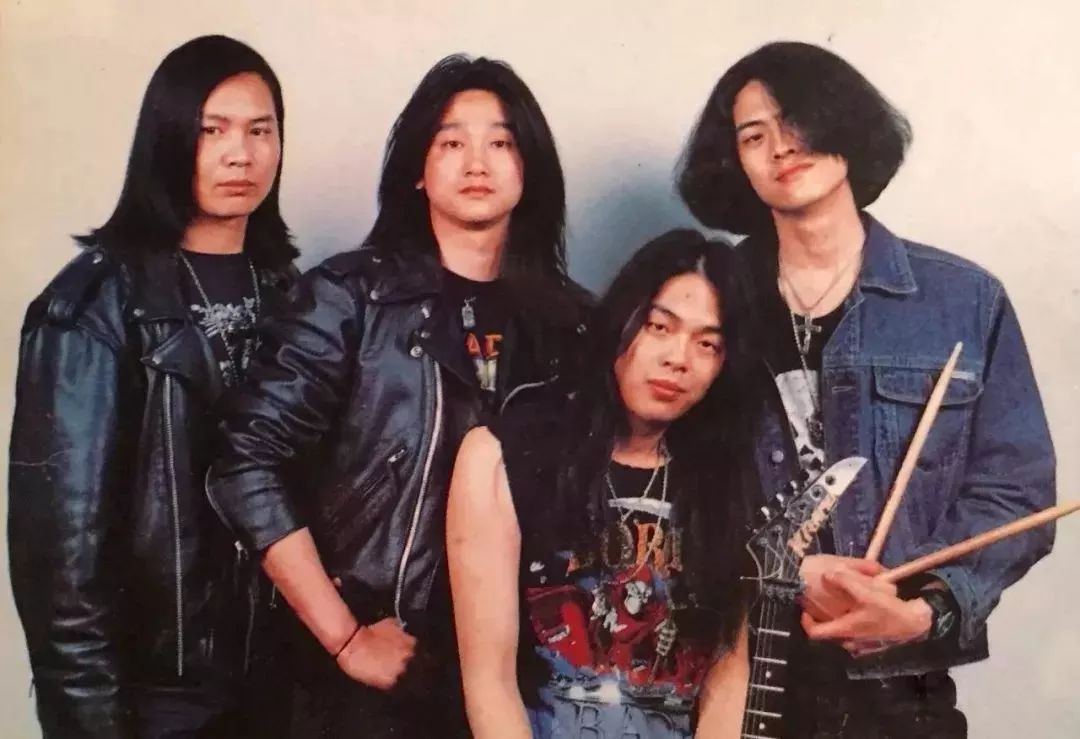
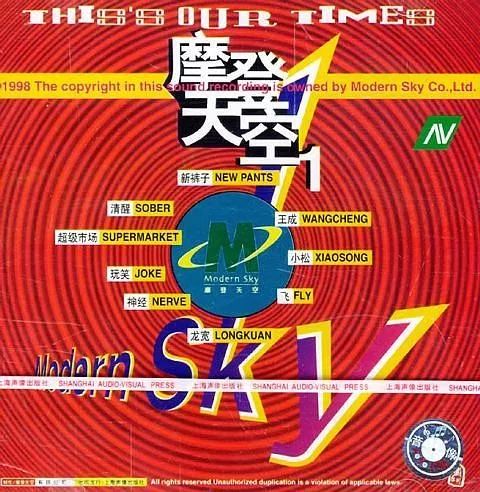
Since 1996, platter-like records have mushroomed, and the works of Xi ‘an Band have been published in the national public platter. Among them, Very Rock 2 released by Beijing Jingwen Records Co., Ltd. in 1997 included Freedom by Chrysanthemum and Knife Band and Retention by Flying Band. In 1998, "Rock Times" included Flying Band’s Back to Dream, and "Modern Sky 1" included Flying Band’s West Sun. In 2000, Modern Sky Audio Music Magazine 6 included a demo by Suni, the lead singer of Bitter Kids; I am You by Chen Yong, the lead singer of Sleeping Bag; Don’t Think Too Much by Gao Song, the guitarist of Flying Band; and Sunflowers in Cloudy Days by Chrysanthemum and Knife. From 1996 to 2000, the tape transited to CD, and the carrier of transmission changed. In those years, there was no professional recording studio in Xi ‘an, and recording was still a luxury for the band. The so-called "underground records" without record numbers were not accepted by that era. The requirement of recording equipment limits the development of the band, and they can only rely on record companies. Everyone thinks that it is the right way to have a chance to be officially published or a demo to be seen by a record company and then release a record.
03
In 1997, Liu Wen, who had formed a band in the painter’s village of Yuanmingyuan in Beijing, returned to Xi ‘an and opened the first musical instrument store in Xi ‘an: Oasis Musical Instrument Store. At that time, musical instruments were often overcrowded, and playing guitar was a cool thing.
In 1998, Du Kai, the lead singer of Boiling Point Band, formed the "Xi ‘an Rock Youth Federation" and began to hold a large-scale campus tour. A new generation of bands have been formed one after another, which is attributed to the accumulation of rock music in China for more than ten years, the influence of the earliest bands in Xi ‘an, and the performances of some Beijing bands and local bands held by Li Quntao’s "Peace HUOSE" and other bars on weekends. The old bands are not as active as before, and new bands are ready to move. With the rock performance of People’s Theatre in 1999 and the first 505 concert, more and more bands were formed, including Mucus Band, Giant Apple Band, CANKERED CORPSE, etc., but most of them broke up and broke up, and finally they could not get rid of the fate of dissolution. From 1998 to 2000, it was the transition period of rock music in Xi ‘an, and the old bands gradually withdrew from the stage.
During this period, Koudai experienced five years of development in Xi ‘an, and the regional market was very mature. Shops selling Koudai were widely known, and a large number of European and American rock music were accepted by more and more people, which also opened the horizons of many bands. Just like when rock music first entered China in the 1980s, there are more different styles of music in the mouthpiece, which makes everyone enthusiastic, and rock music is full of various possibilities. The enthusiasm for the tape has created the tape industry. The major record companies in the West deal with the backlog of products, which should have melted down the crushed records and sold them to China as garbage after being punched or punched. These "special products" have created the rapid fission of Chinese rock style. In the early days, they all sold the sky-high price of 80-100 yuan, which was unimaginable when a tape averaged 10-20 yuan. In those years, people engaged in this industry made money. People in those days had almost no way to understand world music except oral tapes.

The more you know, the more possibilities you have. The styles of rock bands in Xi ‘an are diversified, including CANKERED CORPSE in Death Metal Style, Mucus Band in New Metal Style, Repair Tank Band, Demon Core Band in Punk Style, and Hidden Band … Most of the bands in this period have no performances, so they are unknown. Even if there is a performance, it is only limited to small-scale venues such as campus, and it is difficult for bands to know and understand each other. Perhaps because of this, the bands at this stage have their own understanding of the environment at that time, with great gaps and differences. All this stems from the immaturity of the performance market.
This situation didn’t change until 2001, when the first Hanyao Music Festival was held, all-night performances and more than 20 new bands appeared, which made people exclaim that there were so many bands in Xi ‘an. This music festival has also become the first large-scale outdoor music festival in Xi ‘an rock history.
At the end of 2001, influenced by rock music, Theway, acting as the speaker of British Rogers, opened the Eight and a Half Bar. Soon, Liu Wencheng, the boss of Oasis Musical Instrument Store, set up the Oasis Music Network, which was managed by his friend Cao Shi. In the early days of its establishment, the 8 1/2 Bar only showed movies and undertook a small number of drama performances. Even so, it still attracted a large number of young artists, including action art, media people and excellent screenwriters. Oasis Music Network was a small forum in its early days, and its registered members were only some friends who often came to Oasis Musical Instrument Store and netizens of Cao Shi. But no one can imagine that in the next few years, they will jointly create another golden age of rock and roll in Xi ‘an.
……
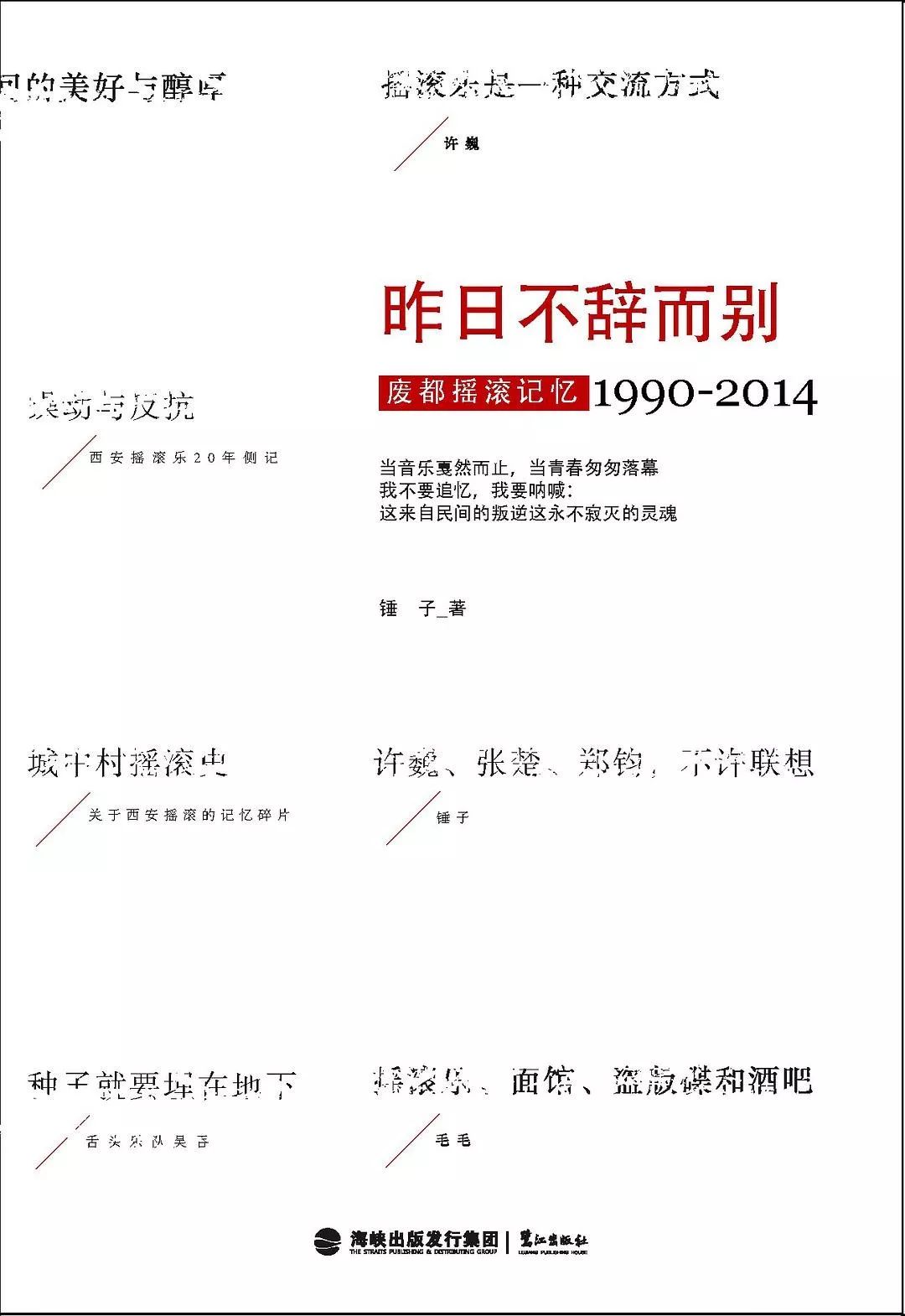
Author: hammer
Publishing House: Lujiang Publishing House
Publication year: July, 2015
(This article is an excerpt from "Agitation and Resistance —— Sidelights on the Development of Rock Music in Xi ‘an")
Editor: Yan He Picture: Network

Contemporary cultural observer