"This is the era of great rock music maverick."
Original Alex Ross
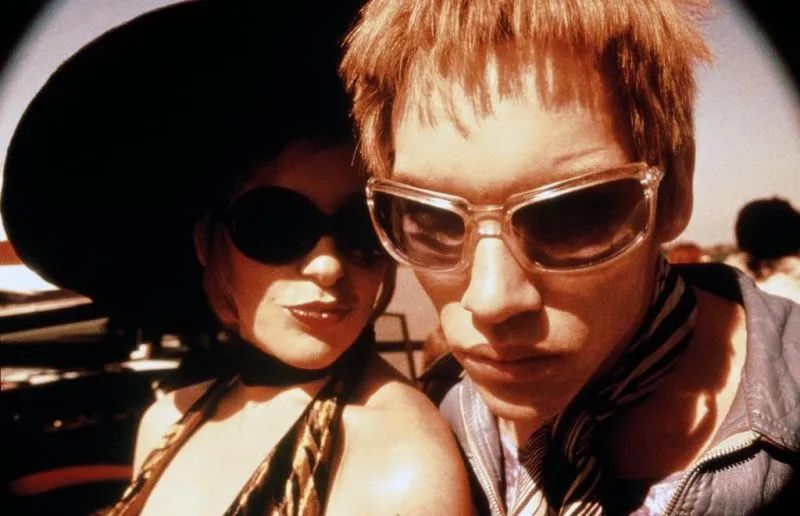
Velvet goldmine.
Among all kinds of art forms, Schopenhauer respects music most, thinking that other arts only express the shadow of things, while music expresses things themselves, which is the most internal soul of phenomena. At the same time, he asserted that art can be divorced from the history of the world without being stained with blood.
However, in the twentieth century, music is closely related to the history of the world-it reflects and influences history.
We can find from the music collection "Only Noise" that music and history are closely intertwined from Vienna before the First World War to Paris in the 20th century, from Hitler’s Germany and Stalin’s Russia to the center of new york in the 1960s and 1970s.
All that’s left is noise, which is not only a carnival for classical music lovers, but also spread from music with the author’s amazing knowledge and textual research ability, linking people, politics and history at that time-professional knowledge of music theory and little-known gossip coexist, which is extensive and interesting. Alex Ross created a musical feast for us in the 20th century, and also made us see the undercurrent under music at the corner of history.
In today’s article, we will come to see the development of avant-garde, pop music and minimalism in the psychedelic era after World War II, and think together. Today, where is the classical music going?
01
Modern musical language
In 1910, the French poet Charles Page wrote: "Everything begins in magic and then ends in politics."
Merton Fieldman saw that this aphorism was equally applicable to 20th century music. Fieldman is not only a pioneer of modernism, but also knows how to appreciate sibelius. He tells us how great ideas have been worn away with the passage of time, and become a topic of endless debate among people who specialize in party struggle and bookworms. He said: "Unfortunately, for most people engaged in art, other people’s ideas have become their opium. There is no security guarantee for taking your own path. "
The beginning of the 20th century is the magic of revolution, which brings us Schoenberg’s chords that distort people’s thinking and Stravinsky’s rhythm that shakes the earth. But as early as the 1920s, the process of politicization had already begun. With the change of fashion, composers scrambled to gain the upper hand and accused others of backwardness. In the 1930s and 1940s, dictatorships hijacked the whole romantic tradition.
But all these can’t be compared with the events that happened at the end of World War II and the beginning of the Cold War.
At this time, the music was split into revolutionary and counter-revolutionary camps, and various theories rushed to appear, and the melee that formed an alliance with you and turned against him continued. Modern music language can be said to be renovated year by year: the twelve-tone system gives way to "holistic sequencing", while the latter gives way to opportunity music, which is replaced by music with free flowing timbre, and it gives way to the rise of new Dadaism, splicing art, and so on.
The information in the late capitalist world is overwhelming, from pure noise to pure silence, from combinatorial set theory to Bibop jazz, which has already washed away the boundary between art and reality. The more irrelevant people come together, the more common it is. Although the Military Government Office of the United States has withdrawn from the historical stage, the Central Intelligence Agency has come forward to fund the music festival instead of it, and the works performed include the super complicated avantgarde music. Politicians during the Cold War, including John F. Kennedy, promised to realize the golden age of free art, from which twelve-tone composers in many American universities indirectly benefited.
World War II never really ended. The superpowers in the allied forces continued to maintain their military presence, and the beginning of the nuclear war and the truth of the death camps exposed in the summer of 1945 shrouded a haze in the hearts of people all over the world. The language that became popular because of the Cold War also penetrated into the music discussion.
Composers also exhausted all possibilities. They also annexed territories, eliminated resistance, advanced and retreated, and also fell to each other. Stravinsky abandoned neoclassicism and adopted the twelve-tone system, which caused violent vibration among his fellow composers. Leonard bernstein commented: "It’s like a traitor who ties all the troops loyal to him."
No matter in European music or American music, the aesthetic view that advocates disharmony, density, difficulty and complexity occupies a dominant position. Eliot Carter, an American composer, gave up the populist style of Copeland and the neoclassical style of Stravinsky. He explained his decision like this: "Before the end of the Second World War, part of the reason was to reread Freud and others’ works and think about psychoanalysis. I realized that in the world we live in, physical and mental atrocities will be a long-term problem. I realized that the human nature that contributed to the neo-classical aesthetics, its whole thinking method, is actually hiding ugly things, which is tantamount to sweeping dust under the carpet. In my opinion, we can no longer treat those things by beating around the bush. "
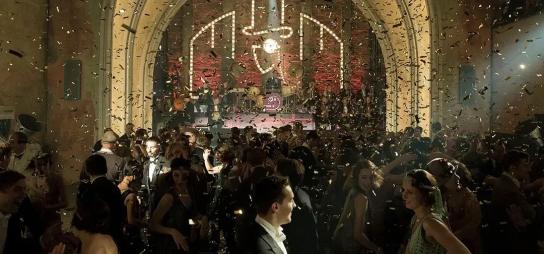
Babylon Berlin
02
The avant-garde in the 1960 s
While Mei Xian dominated the transformation of tonal music, the avant-garde movement in Europe entered a period of arbitrary, upside-down and confusing. This is the era of great rock music rebellion, sexual liberation, and trying drugs and psychedelic culture. In the noisy spirit of the times, avant-garde elements set off a second wave, rejecting the previous generation’s persistence in purity and abstraction.
Chance, uncertainty, image notation, and other forms of music recorded in unconventional ways are popular in Europe. Some works are biased towards the musical past, and the past is cut into paragraphs by quoting and splicing. Other works go out of interstellar space and abandon the appearance of all system structures. Various phenomena have emerged, such as Dada pranks, quoting pop music and catchy communist revolutionary songs becoming popular again.
Some composers’ self-expression skills are dazzling, and they regard the international rise of the avant-garde as the theme of their works. Dieter Nebel’s 1961 work "Waste I/1" invited the audience to become part of the performance by talking to each other, making noises for or against it, coughing, pushing chairs and so on.
John Cage’s influence reached its peak. In 1958, he traveled to Germany and gave a series of lectures in darmstadt instead of Bretz. His lecture changed European music forever, and it was never the same as before. Everyone who knows the origin of Cage knows to be prepared to feel extraordinary events; Back in 1950, he delivered a speech entitled "A Speech on Nothing" in the artists’ club, and said at the beginning: "I’m here, and I have nothing to say."
In the Q&A section that followed, Cage decided to answer all questions with six fixed answers, which caused chaos. One of the six answers is "Please repeat this question … say it again … say it again …" In Cage’s lecture in darmstadt, some paragraphs are internally related, but opportunistic behavior gradually gained the upper hand. By the third lecture, he began to light cigarettes at intervals specified in the Book of Changes. The main body of the last lecture became a long list of questions, such as: "Do you agree when Bretz said what he said?" Are you hungry? Twelve. Why are you doing this (you know what you will get)? Will Blaze be there? Or did he leave before I noticed? "
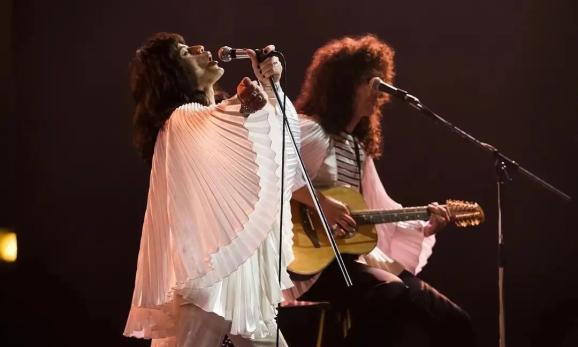
Bohemian Rhapsody
03
Minimalism in rock music
It is pure American art, which has nothing to do with the nameless anger of modernism, but overflows with the optimism of pop music. Lech said: "Schoenberg made a truthful musical portrayal of his times. Although I admire him, I don’t want to write like him. Stockhausen, Beriau, and Blaze used the most sincere language to describe how the European continent was cleaning up the debris in the ruins of World War II. But for Americans who lived in 1948, 1958 and even 1968, in the real environment where the tail of a car was flying, Chuck Berry appeared and the sales of hamburgers exceeded one million, we must pretend that we must experience a dark brown Viennese anger, which is undoubtedly a lie and a musical lie … "
Lech and his like-minded people borrowed materials from pop music, especially Bibop and modern jazz, and then returned to influence pop music. "Underground Velvet" has absorbed lamont Young’s aesthetic view of humming sustained sound. David bowie and Brian Eno, such artistic rock musicians, came to watch the performances of Lech and Glass.
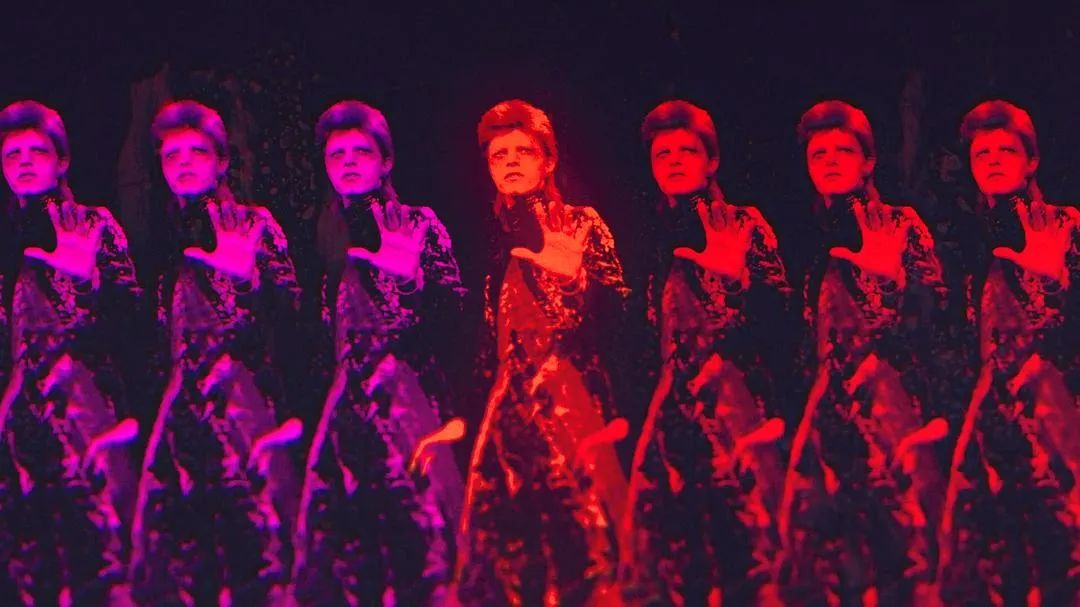
Daydreaming in the Moon Age
In the 1980s and 1990s, the influence of minimalism spread, and we all felt it. As long as we walked into an elegant handicraft shop or elegant hotel front porch, the fluttering music in the air would unconsciously become related to Lech’s Music for Eighteen Musicians.
Brian Eno caught the key of minimalism by saying, "Repetition is a form of change."
Repetition is an inherent feature of sound science, and tones spread in the air through periodic shocks. Repetition is also an inherent means for consciousness to deal with the outside world. So in a sense, minimalism is to return to nature.
At the same time, repetition is the keynote of all technological societies. Robert Fink studied the cultural background of minimalism movement, and revealed that minimalism is the repetition of simulating the culture of consumer society from accelerated warming to saturation numbness in many cases, and the repeated jingling of TV commercials is a typical example. But he argues that minimalism is a silent criticism of the existing society. They see depth in superficial phenomena and find slowness in fast movement.
Fink borrowed a new word "playing style" created by musician Christopher Small and wrote: "Repeated playing style rarely shows longing for a sincere relationship, which actually does not exist. At least in this sense, it has the virtue of honesty, which is often lacking in more traditional avant-garde playing style. In the consumer society of late capitalism, there are endless repetitive relationships, which we will face again and again. On this premise, the way of playing music repeatedly reminds us to face up to reality, provides us with warnings and provides some resistance, even if it only provides an aesthetic pleasure. Because of repetition, we have entered the current culture, so through repetition, we may be freed from this culture. "
It is classical music and the history of the 20th century.
Love music, understand music, and understand music.
A maverick personality and a shocking voice.
Original title: "This is the era of great rock music rebellion" "
Read the original text