Probe into the water source area of the middle route of South-to-North Water Transfer Project

  Xinhua News Agency, Danjiangkou, Hubei/Xichuan, Henan, May 20th Title: Probe into the Water Source Area of the Middle Route of South-to-North Water Transfer Project

  Xinhua News Agency reporters Liu Shiping, Qu Ting and Sun Qingqing

  Danjiangkou Reservoir, known as "the largest artificial lake in Asia", is the water source area of the Middle Route of South-to-North Water Transfer Project. Xinhua News Agency’s all-media investigation team of South-to-North Water Diversion Project came here on the 20th, followed the water quality monitor into the reservoir area, boarded the dam with the dam manager, and drove to the beginning of the long canal — — At the head of Taocha canal, look for the "password" of the water source area where a river of clear water flows northward.
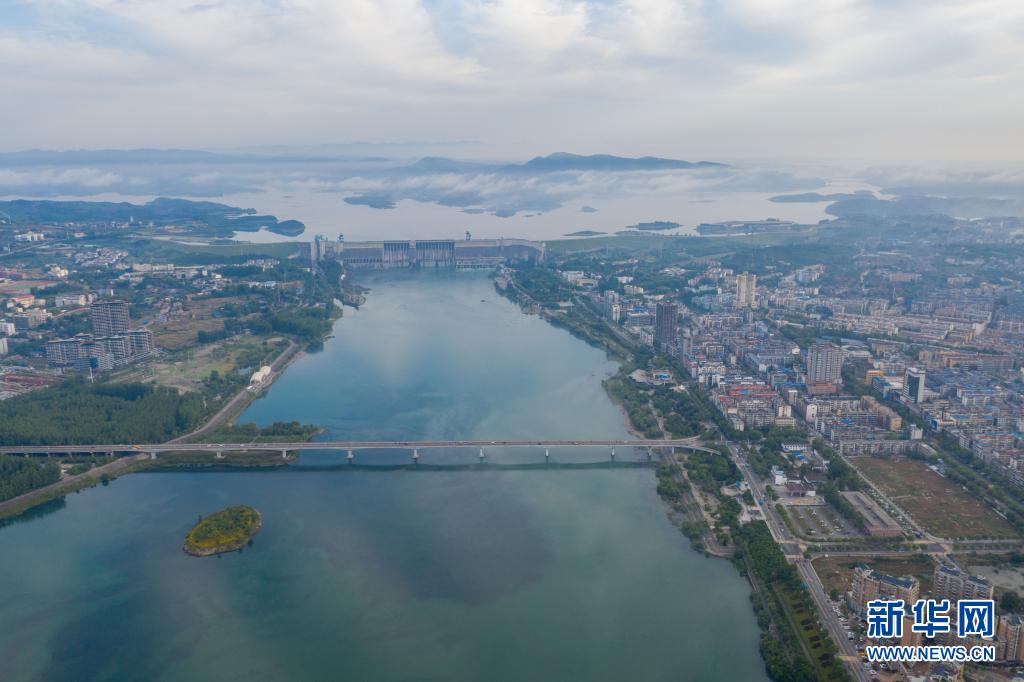
  This is the view of Danjiangkou Reservoir in danjiangkou city, Hubei Province (photo of UAV) taken on May 20th. Xinhua News Agency reporter Cai Yang photo

  Water quality: "Giant panda in water" appears in the reservoir.

  At about 10 o’clock, the reporter and Han Baihui, a water quality monitor in the reservoir area of the Middle Route Water Source Company of South-to-North Water Transfer Project, took a water quality monitoring boat and came to one of the 16 important water quality monitoring sections in the reservoir area — — Monitoring section in front of dam.

  He told reporters that in 2018, the water quality monitoring personnel of the Mid-line Water Source Company found a large number of clustered living peach jellyfish in the center of the reservoir area, and successfully collected multiple living specimens.

  "Peach blossom jellyfish have ‘ Giant panda in water ’ Known as an extremely endangered species, it has high requirements for the water environment. " Han Baihui said that the appearance of living peach jellyfish in the reservoir is directly related to the improvement of the ecological environment here, which is a strong proof to test the effectiveness of the water source protection system.

  The water samples collected by Han Baihui were analyzed and tested in the laboratory, and the results showed that the water quality in the reservoir area was excellent, which met the Class II water quality standard.

  Qin He, a senior engineer in the water supply department of Midline Water Company, said that in order to do a good job in reservoir water quality monitoring, Midline Water Company has built a network of water quality monitoring stations in the reservoir area. The monitoring data for many years show that the water quality in the reservoir area is stable and can reach or exceed the Class II standard of surface water.
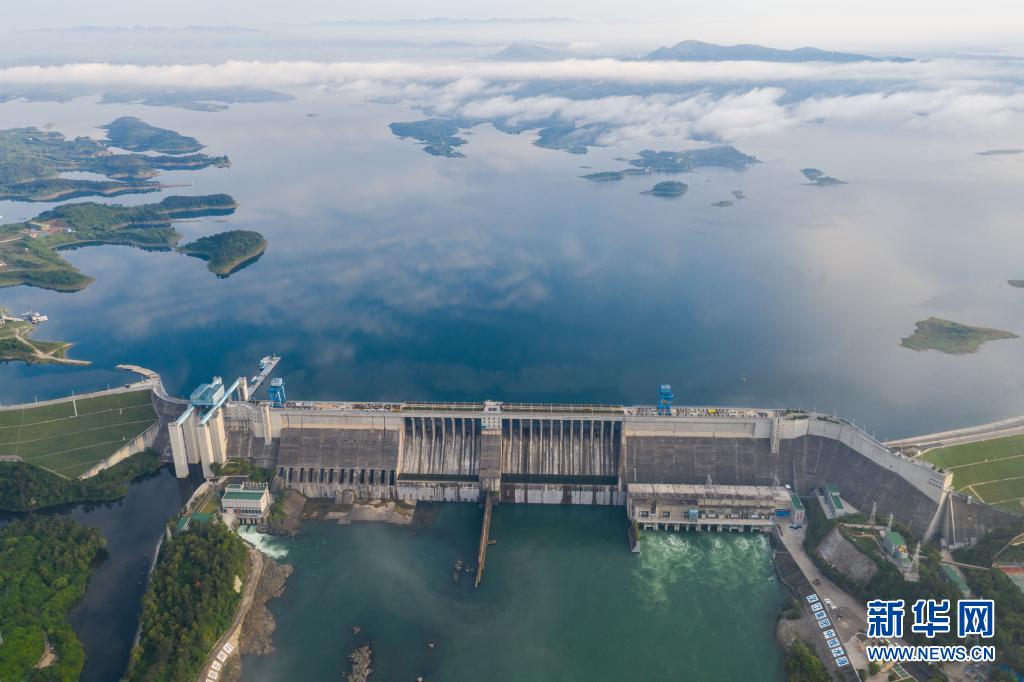
  This is the view of Danjiangkou Reservoir in danjiangkou city, Hubei Province (photo of UAV) taken on May 20th. Xinhua News Agency reporter Cai Yang photo

  Dam: "Dressing and wearing a hat" is only for more South-to-North Water Diversion.

  At 11: 05, the reporter came to the dam with Tang Yuanchang, executive deputy director of the Technical Committee of the Central Line Water Company. Looking around, the reservoir area was blue and the dam area was infinitely green.

  "The reservoir is so vast because of this heightened dam. Without it, no amount of water can gather. " Tang Yuanchang said.

  The reporter saw at the dam safety monitoring center station that the water level in front of the Danjiangkou Reservoir dam was 160.98 meters that day, exceeding the summer flood control limit water level, which means that there is enough water in the water source area of the middle route of South-to-North Water Transfer Project to be transferred to the north.

  By the 20th, Danjiangkou Reservoir had transferred 38.3 billion cubic meters of water to the north. It is the Danjiangkou dam after heightening that stops this reservoir of clear water.

  The heightening of Danjiangkou Dam, which was completed in the 1970s, raised the dam elevation from 162 meters to 176.6 meters, raised the normal water level of the reservoir from 157 meters to 170 meters, and correspondingly increased the storage capacity of the normal water level from 15.665 billion cubic meters to 27.205 billion cubic meters, thus meeting the need of water supply from the central line to the north. At the same time, the newly opened open channel can be used to deliver water to Beijing by itself and supply water to Beijing, Tianjin, Hebei and Henan along the route.

  "The heightening project is a thickening, heightening and transformation based on the initial project. The industry compares this to ‘ Wear clothes and hats ’ High technical requirements and difficult construction are no less than building a new dam. " Tang Yuanchang said that the solution of a series of major technical problems has better ensured the quality of the heightening project. In October 2017, the water level of the reservoir reached 167 meters, and the heightened dam stood the test.

  As of May 18th, Danjiangkou Reservoir has supplied 4.089 billion cubic meters of water to the north this year, completing 55.08% of the annual water supply plan, ensuring the safety of water supply in the middle line.
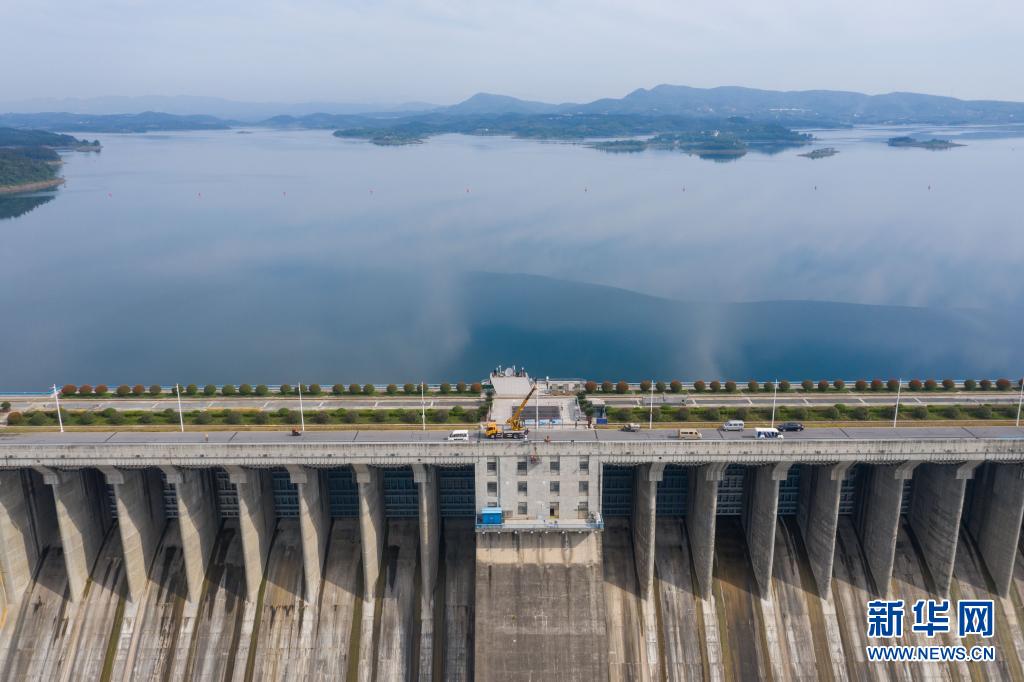
  This is the view of Danjiangkou Reservoir in danjiangkou city, Hubei Province, which was taken on May 20th. On the same day, the water level in front of the Danjiangkou Reservoir dam was 160.98 meters, which exceeded the summer flood control limit, which means that there is enough water in the water source area of the middle route of South-to-North Water Transfer Project to be transferred to the north (photo of drone). Xinhua News Agency reporter Cai Yang photo

  Water transfer: "friends circle" cooperates to smooth the water pulse

  "The improvement of water quality can make the water of the North Water Transfer Project clear, and the heightening of the dam can ensure the quantity of water transfer. The next step is how to control the operation of the reservoir to ensure the flood control and water supply safety of the reservoir and give full play to the comprehensive utilization benefits of the reservoir." Hu Yongguang, head of the Reservoir Dispatching Section of the Water Dispatching Center of Hanjiang Group Corporation, said.

  According to reports, after the water supply, Hanjiang Group Corporation and the Mid-line Water Source Company jointly set up a water supply leading group for the Mid-line Water Source Project to coordinate the water supply management of the reservoir.

  "According to the authorization of the Yangtze River Water Conservancy Commission, Hanjiang Group Corporation, Middle Route Water Source Company and the Middle Route Construction Management Bureau of the South-to-North Water Diversion Project negotiated and established the water supply dispatching process at the head of Taocha Canal: the Middle Route Construction Management Bureau of the South-to-North Water Diversion Project issued a dispatching request, and Hanjiang Group Corporation submitted it to the Yangtze River Committee for approval and issued a dispatching order. The water supply dispatching order was strictly implemented at the head of Taocha Canal, and the implementation situation was timely fed back." Hu Yongguang said.

  The Middle Route of South-to-North Water Transfer Project draws water from Taocha Canal Head Hub to the north. If Danjiangkou Reservoir is the "big pool" of South-to-North Water Diversion Project, the function of Taocha canal head is equivalent to controlling the "faucet" of Danjiangkou Reservoir, and controlling and regulating the amount of water going northward.

  At 15: 00, the reporter drove about 40 minutes from danjiangkou city, Hubei, and came to the head of Taocha Canal in Xichuan County, Henan Province. Wang Xiyuan, director of the Taocha Management Office of the Middle Route of South-to-North Water Transfer Project, said that as the "faucet" of the middle route, the first section of the canal is the beginning of a long canal in the middle route, and we do our best to dispatch water to ensure that a clear water from the first section of the Taocha canal enters the main canal and runs all the way to the north.

  Ask the canal to be so clear, because there is flowing water from the source. At present, the high-quality south water from Danjiangkou Reservoir has become the main water source of more than 20 large and medium-sized cities in Beijing, Tianjin and Hebei.
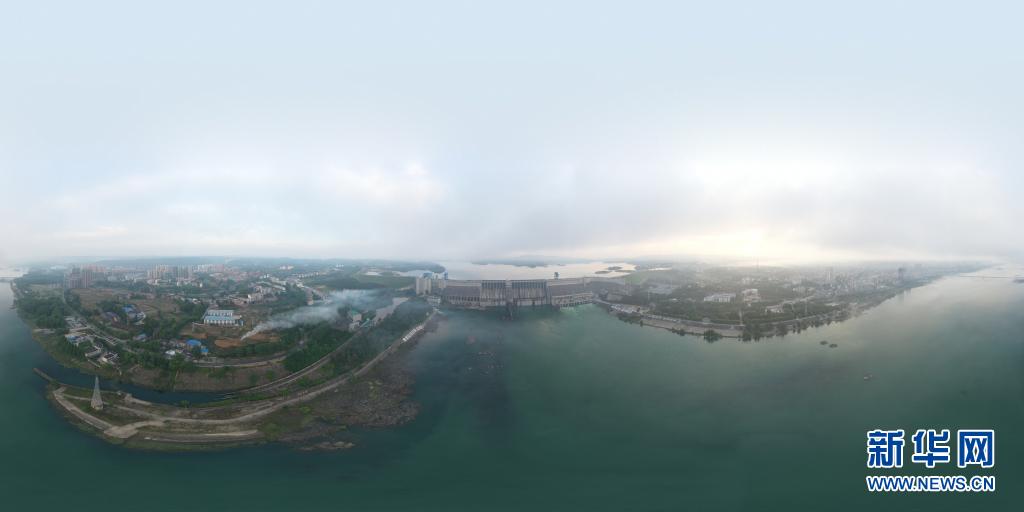
  This is a panoramic photo of Danjiangkou Reservoir in danjiangkou city, Hubei Province, taken on May 20th. Xinhua News Agency reporter Cai Yang photo
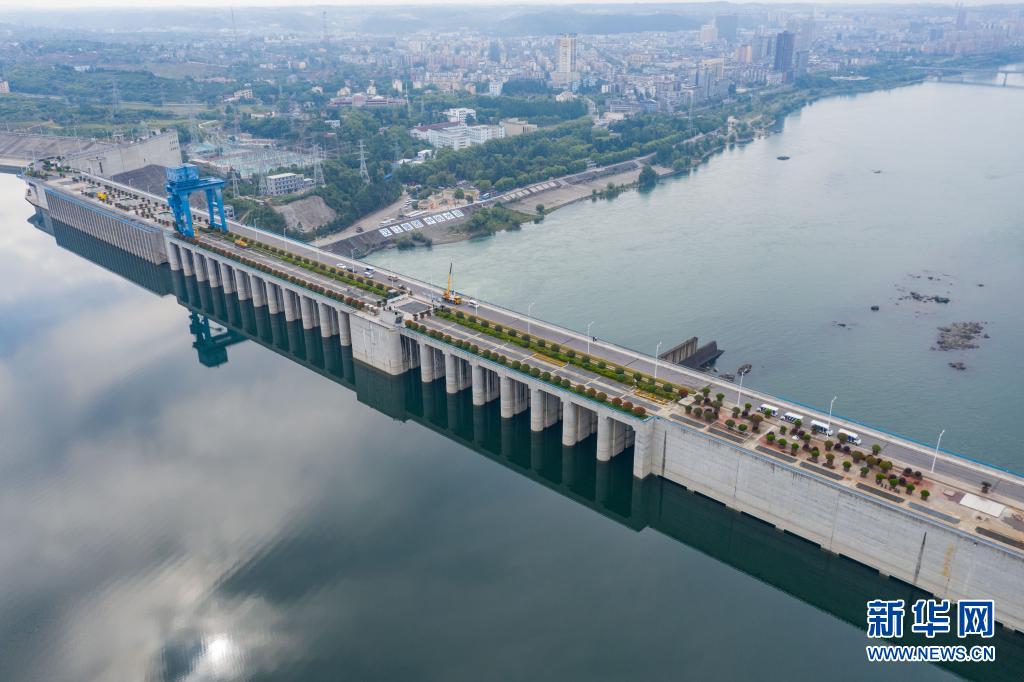
  This is the view of Danjiangkou Reservoir in danjiangkou city, Hubei Province, which was taken on May 20th. On the same day, the water level in front of the Danjiangkou Reservoir dam was 160.98 meters, which exceeded the summer flood control limit, which means that there is enough water in the water source area of the middle route of South-to-North Water Transfer Project to be transferred to the north (photo of drone). Xinhua News Agency reporter Cai Yang photo
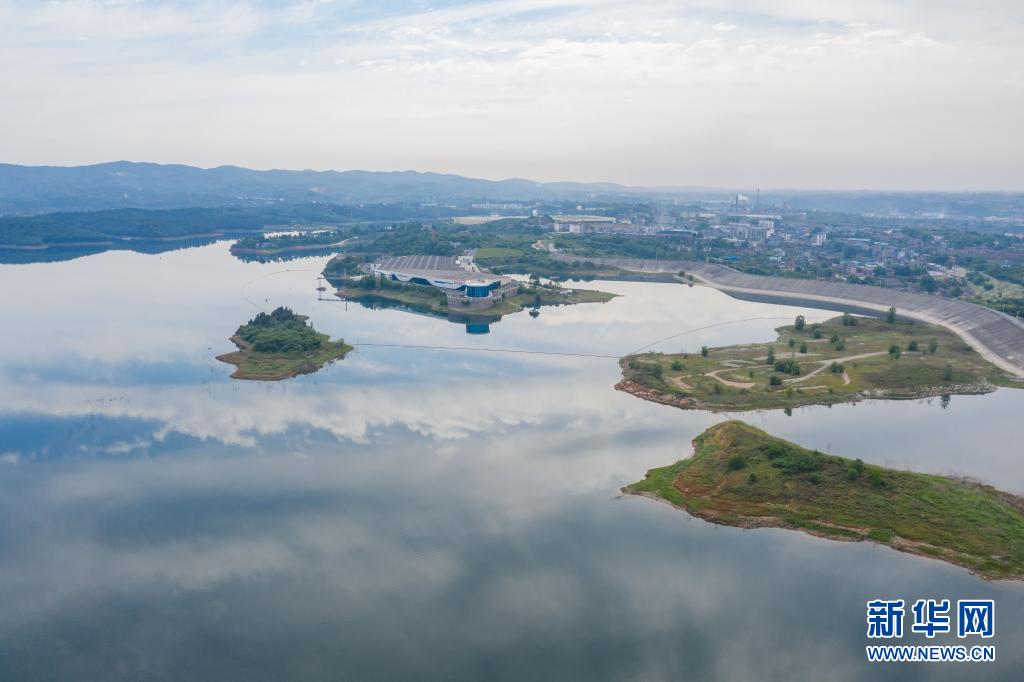
  This is the view of Danjiangkou Reservoir in danjiangkou city, Hubei Province (photo of UAV) taken on May 20th. Xinhua News Agency reporter Cai Yang photo
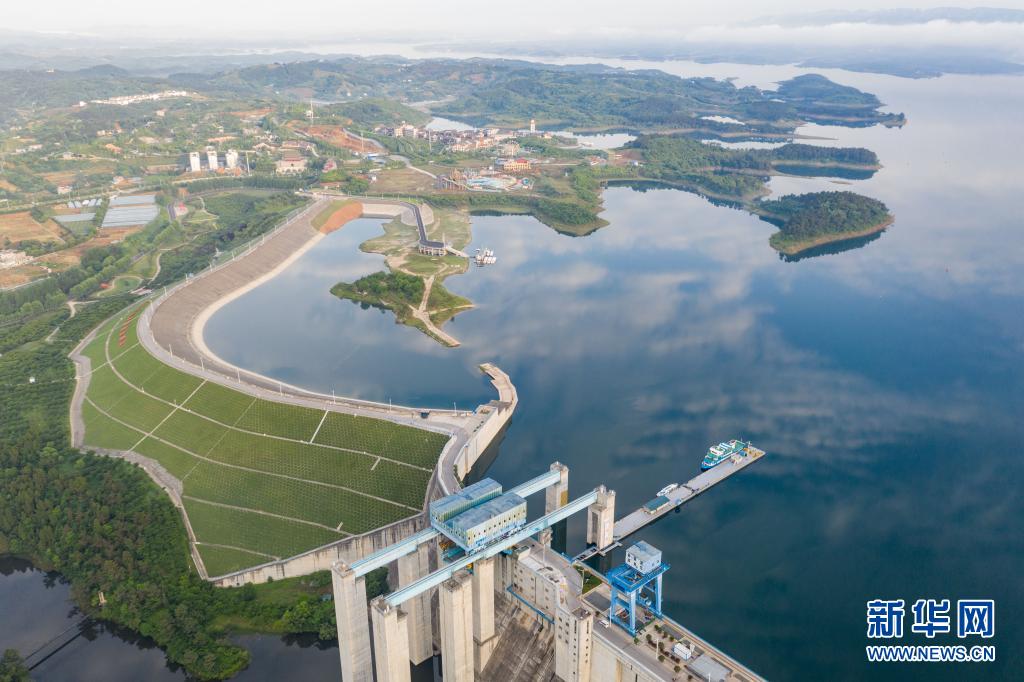
  This is the view of Danjiangkou Reservoir in danjiangkou city, Hubei Province (photo of UAV) taken on May 20th. Xinhua News Agency reporter Cai Yang photo

  On May 20th, in the monitoring section in front of Danjiangkou Reservoir in danjiangkou city, Hubei Province, the water quality monitoring personnel and media reporters in the reservoir area of the Middle Route of South-to-North Water Transfer Project showed the collected water samples. Xinhua News Agency reporter Cai Yang photo
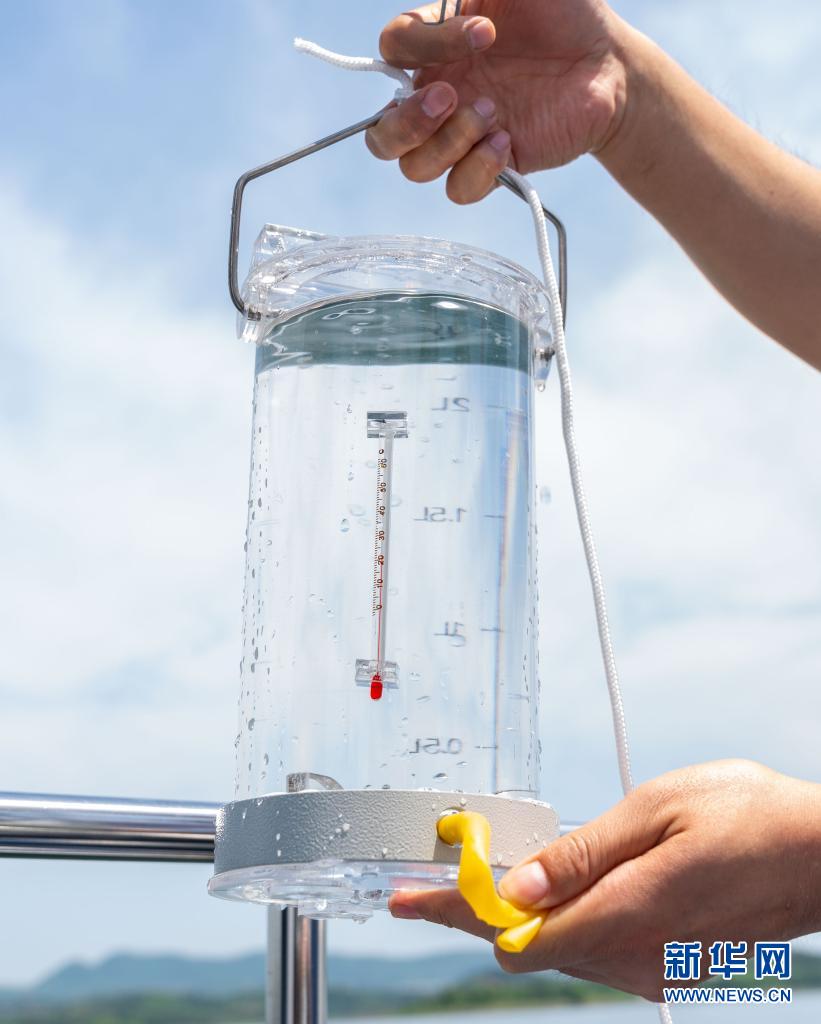
  On May 20th, the water quality monitoring personnel in the reservoir area of the Middle Route Water Source Company of South-to-North Water Transfer Project showed the collected water samples at the dam front monitoring section of Danjiangkou Reservoir in danjiangkou city, Hubei Province. Xinhua News Agency reporter Cai Yang photo
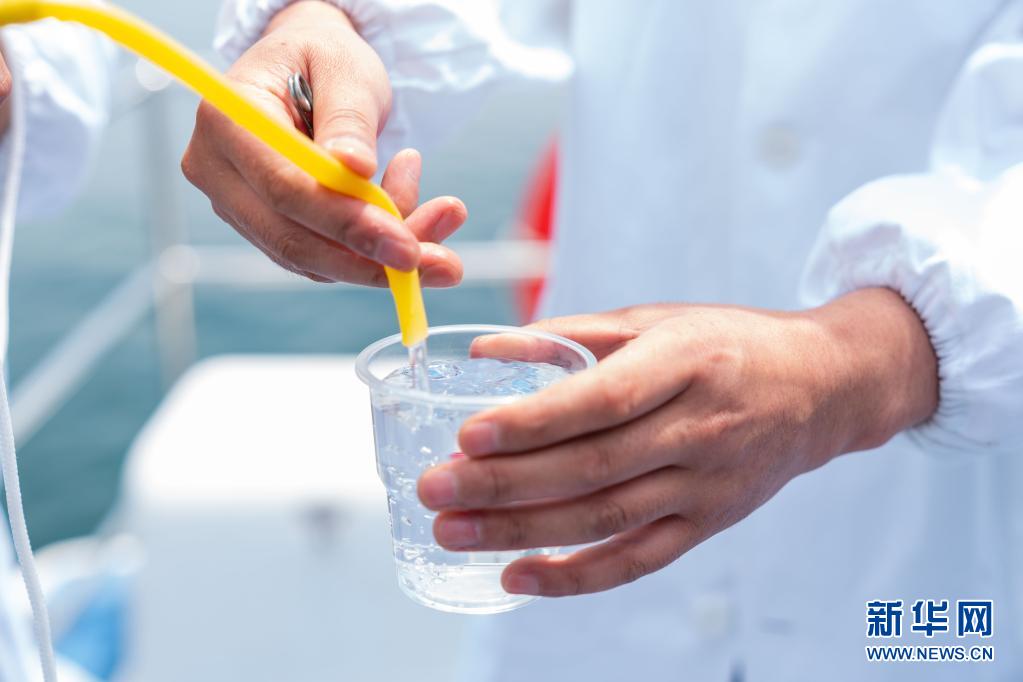
  On May 20th, the water quality monitoring personnel in the reservoir area of the Middle Route Water Source Company of South-to-North Water Transfer Project showed the collected water samples at the dam front monitoring section of Danjiangkou Reservoir in danjiangkou city, Hubei Province. Xinhua News Agency reporter Cai Yang photo

  On May 20th, Tang Yuanchang, executive deputy director of the Technical Committee of Midline Water Company, showed how to collect water samples at the dam front monitoring section of Danjiangkou Reservoir in danjiangkou city, Hubei Province. Xinhua News Agency reporter Cai Yang photo
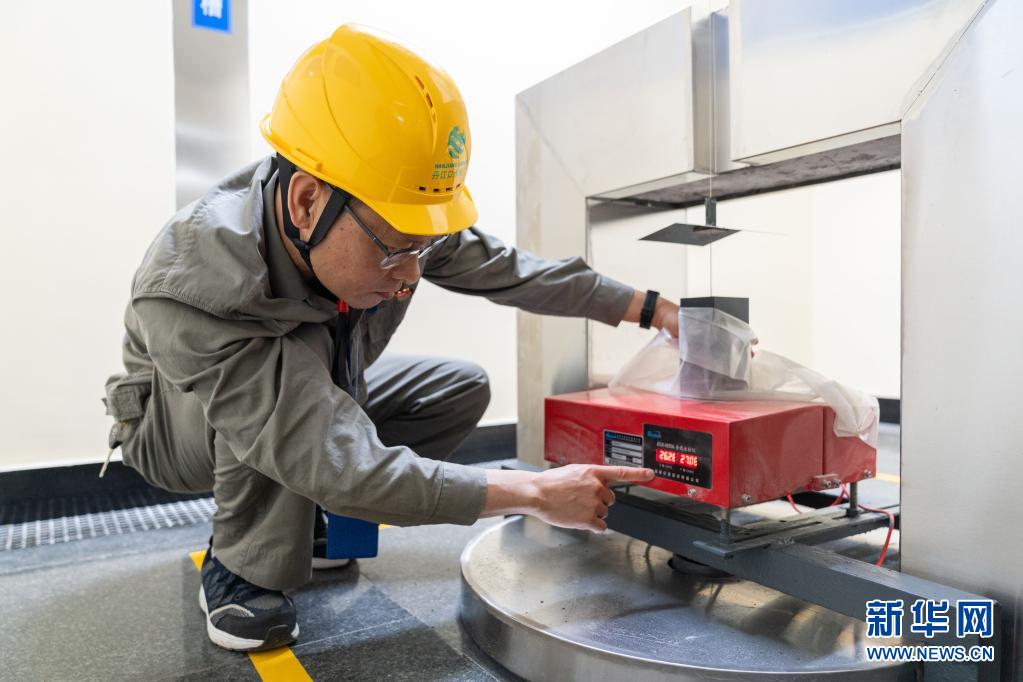
  On May 20th, in Danjiangkou Dam, danjiangkou city, Hubei Province, You Rongqiang, director of the monitoring branch of Danjiang Power Plant of Hanjiang Group Corporation and deputy secretary of the Party branch, inspected the automatic monitoring equipment. Xinhua News Agency reporter Cai Yang photo
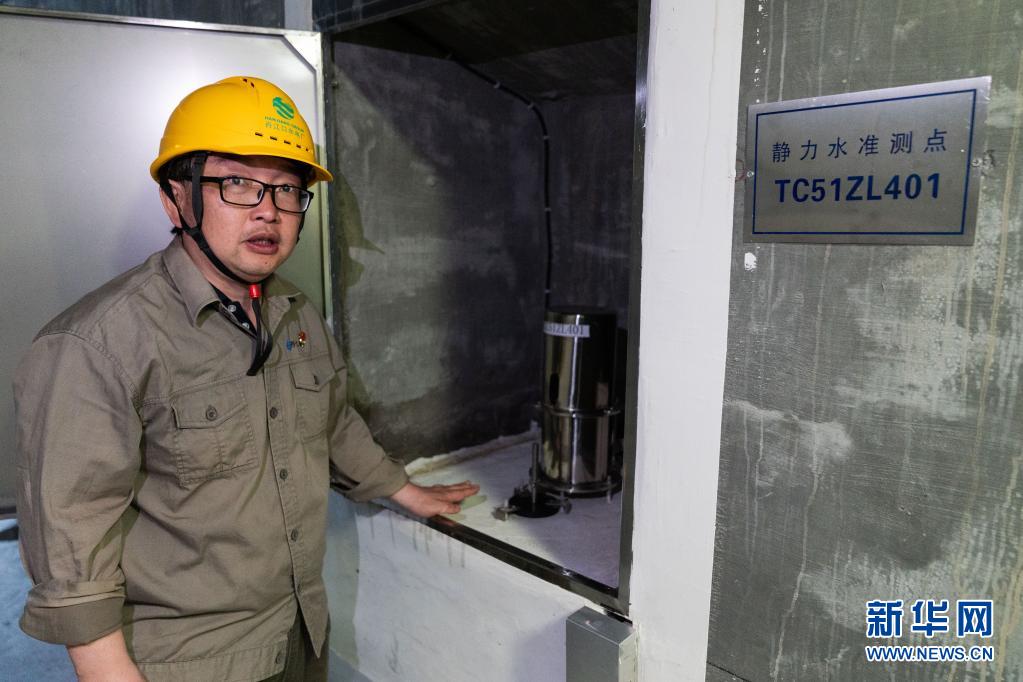
  On May 20th, at Danjiangkou Dam in danjiangkou city, Hubei Province, Yang Bing, deputy director of Danjiang Power Plant Monitoring Branch of Hanjiang Group Company, inspected the static leveling point, which is used to measure the vertical displacement change of concrete dam. Xinhua News Agency reporter Cai Yang photo
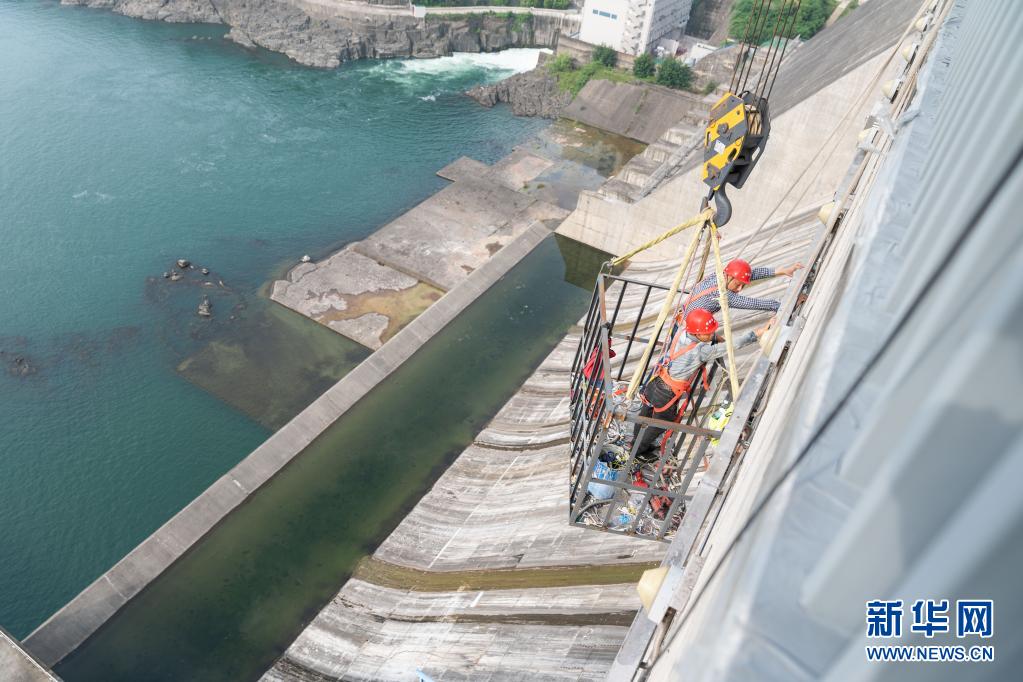
  On May 20th, at Danjiangkou Dam in danjiangkou city City, Hubei Province, workers were working on the dam crest. Xinhua News Agency reporter Cai Yang photo
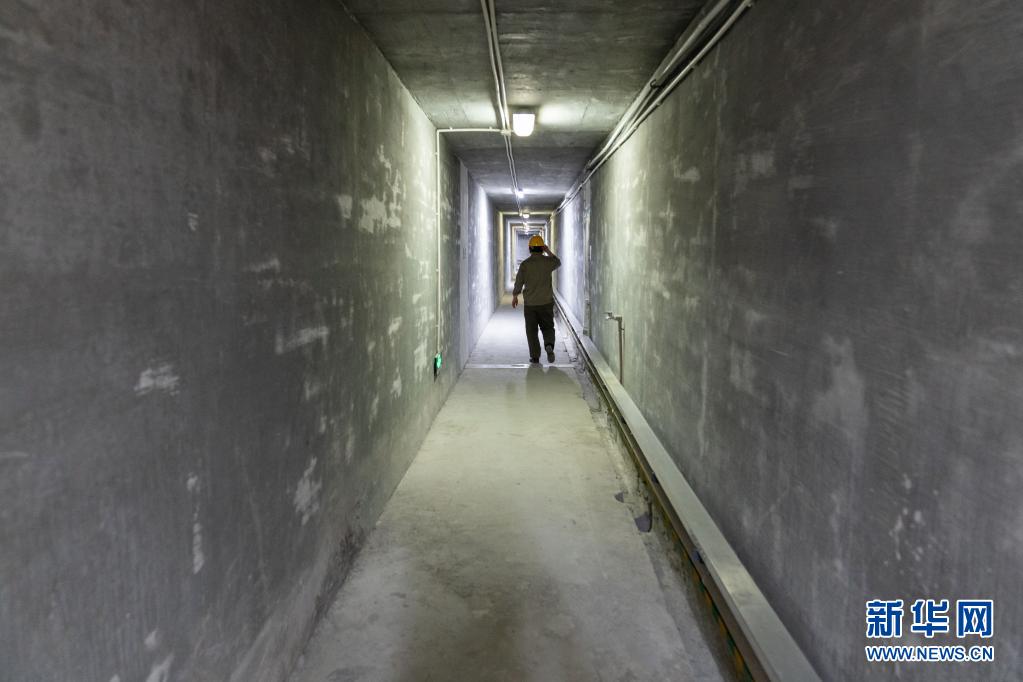
  On May 20th, in Danjiangkou Dam, danjiangkou city, Hubei Province, the staff inspected the dam body. Xinhua News Agency reporter Cai Yang photo

  On May 20th, at Danjiangkou Reservoir in danjiangkou city, Hubei Province, tourists were enjoying the beautiful scenery of the reservoir area. Xinhua News Agency reporter Cai Yang 

Can’t the deciduous teeth be corrected if they haven’t been replaced? The sooner you correct it, the better? Let the child’s teeth "stand at attention"

  Dental health is an important symbol of national health.

  The fourth national oral health epidemiological survey shows that the situation of children suffering from dental caries is on the rise; Middle-aged people have poor periodontal condition; The oral health of the elderly is improving, but there are still some problems.

  Tooth is the beginning of digestive tract, and its chewing function is related to the nutritional intake of human body and maintains the energy balance of the body. For example, infections and inflammatory factors in the oral cavity can cause or aggravate chronic diseases such as cardiovascular and cerebrovascular diseases and diabetes, and affect the quality of life. Therefore, dental health is not a trivial matter. To improve the health literacy of the whole people, we should not ignore dental health.

  On the one hand, the dental diseases of Chinese residents are caused by the changes in lifestyle and diet structure, and people’s intake of sugary foods and sugary drinks has increased, which has increased the risk of dental caries. On the other hand, many people lack oral health knowledge, which leads to dental diseases for life.

  Chinese often said "old-fashioned". In fact, when people are old, their teeth are not necessarily old. "Old teeth" are not necessarily because they are old, but probably because their teeth are sick. If you don’t want to lose your teeth, you should start with dolls and oral health knowledge.

  This edition will launch the trilogy of "Healthy Through Train and Tooth Protection" from now on, focusing on the dental health problems of children, adults and the elderly respectively, clarifying the misunderstanding of nursing and introducing the common sense of protection, so please pay attention.

  — — compiler

  With people’s attention to oral health and tooth beauty, the demand for orthodontics in children is increasing.

  Orthodontics refers to the correction of teeth and the removal of deformities of teeth and jaws. Many parents found their children’s dental problems early and tend to "start from childhood".

  So, what are the misunderstandings in children’s orthodontics? What should I do if my child’s teeth are irregular and asymmetrical? Our reporter interviewed Hu Wei, chief physician of Orthodontics Department of Peking University Stomatological Hospital.

  Who should I treat my crooked teeth?

  You should go to the orthodontics department of stomatological hospital or the orthodontics specialty of stomatological clinic.

  Reporter: If you want to correct your child’s teeth, can you find a general dentist to treat it?

  Hu Wei: First of all, it should be emphasized that the problem of correcting children’s teeth is not to find a dental department, but to find an orthodontist, not a general dentist.

  General dentists don’t know much about the mechanism of dentofacial deformity, and they don’t know much about the growth and development of children’s teeth and jaws. Naturally, they are not familiar with the best correction opportunity and method of dentofacial deformity, which may delay the correction of children. In the orthodontics clinic, it happened that the doctor who filled the child’s teeth was correcting the child’s teeth at the same time. Because he didn’t make a comprehensive diagnosis and treatment design, he only focused on the correction of the tooth irregularity. As a result, the teeth were initially lined up, but the problem of the child’s jaw dysplasia became more and more serious. When he found an orthodontist, he missed the best time to correct the jaw dysplasia. This can be described as "picking up sesame seeds but losing watermelon".

  The growth and development of children’s teeth and jaws and the correction of various dentofacial deformities are the key contents that orthodontists study and pay attention to. Only orthodontists can comprehensively evaluate the types and degrees of children’s tooth and jaw deformities and their growth and development, make a comprehensive and correct diagnosis, and take targeted early correction. Every child’s teeth and jaw deformities are personalized, and early corrective methods and appliances for these problems should fully reflect individuality.

  Therefore, when children’s teeth are found to be crooked or can’t grow, they should go to the orthodontics department of stomatological hospital or the orthodontics specialty of stomatological clinic.

  How to determine the timing of correction?

  Some tooth deformities can wait, and some can’t; You don’t have to wait until the deciduous teeth are replaced before correcting them.

  Reporter: Can a child’s deciduous teeth be corrected when they have not been replaced?

  Hu Wei: The concept that "deciduous teeth cannot be corrected until they have been replaced" is deeply rooted in many people’s hearts, even including some dentists.

  In fact, some tooth deformities can wait, while others can’t, because the best time for correction is fleeting. For example, the deformities that affect the growth and development of the jaw, such as lower teeth and facial deviation, need to be corrected as soon as possible. Considering the children’s ability to cooperate with orthodontic treatment, girls and boys can start early correction of lower teeth and facial deviation at the age of about 4 and 5, and no later than 8 years old. For another example, some primary school students will have some bad oral habits, such as licking or biting their fingers, sticking out their tongues or licking new teeth with their tongues, biting their lips, etc. These habits must be corrected in time, otherwise it will affect the normal development of jaws and teeth, leading to dentofacial deformities. Some problems in children’s tooth replacement also need to be corrected as soon as possible. The reason why many parents bring their children to see a doctor is that the deciduous teeth have been lost for a long time, but they can’t see the permanent teeth growing out. In fact, it is because the child’s permanent teeth have problems in the growth process and cannot erupt (impacted teeth) on their own. These conditions need to be diagnosed and corrected as soon as possible after being discovered. Some children suffer from allergic rhinitis, tonsils and adenoids, which affect the normal breathing of the nose. They need to open their mouths to breathe, and in the long run, they will also have more obvious jaw and tooth deformities. This kind of problem needs to be diagnosed and treated in otorhinolaryngology department first, and the swollen tonsils and adenoids should be removed to make the respiratory tract unobstructed, and then an orthodontist should be found to correct it.

  Therefore, after the replacement of deciduous teeth, many children’s dentofacial deformities have missed the best opportunity for correction. Whether children and adolescents need early orthodontic treatment, when to treat them, and what kind of correction methods to use need to be determined by orthodontists according to the types and degrees of children’s dentofacial deformities and their growth and development.

  Find the deformity and treat it quickly?

  It depends on the specific situation. Parents should not worry too much.

  Reporter: So, is it better to correct your child’s teeth as soon as possible?

  Hu Wei: In sharp contrast to the view that "deciduous teeth can’t be corrected before they are replaced", some parents are too anxious about their children’s tooth deformities and always want to correct them as soon as possible. Parents’ mood is understandable, but it depends on the specific situation.

  As mentioned above, lower teeth, crooked face, bad oral habits (biting fingers, spitting out tongue, etc.), mouth-opening breathing caused by tonsil and adenoid enlargement, impacted teeth and supernumerary teeth need early detection and treatment. For the short chin (mandibular retraction deformity), we should wait until the peak of the child’s growth and development to temporarily correct it, so that we can get twice the result with half the effort. Generally, the growth and development peak of girls is between 10 and 12 years old, and boys are two years later than girls, and their growth and development peak is mostly between 12 and 14 years old.

  In addition, there is no need to worry about some temporary tooth deformities during children’s tooth replacement, such as cracks between maxillary incisors (central incisors) and crowns of maxillary incisors (lateral incisors) sticking out to both sides. This is because when the central incisor erupts, the root of the central incisor is squeezed by the lateral incisor that has not erupted, and the crown of the lateral incisor is against the root of the central incisor, which causes the central incisor to tilt to both sides, resulting in crevices. However, the "brothers" have not been separated for a long time. After the lateral incisors erupt, the crowns of the central incisors will also be squeezed. At that time, the two front teeth will gradually move closer to the middle and eventually return to the correct position.

  The most common phenomenon during children’s tooth replacement is that the front teeth grow in and out, which is irregular (crowded dentition). These are mainly due to the immature jawbone, the newly grown permanent teeth are much larger than the deciduous teeth, and the space of the original deciduous teeth can not meet the needs, so there is a contradiction between supply and demand in the dentition, and several newly grown permanent teeth have to be wronged. With the growth and development of maxilla and mandible, the dental arch will increase. The "home" has become bigger, and the permanent teeth that were originally crowded together will automatically adjust their positions, and the degree of crowding will be improved. The replacement period of primary and permanent teeth can be said to be an "ugly duckling" stage that children have to go through. Parents should not worry too much. Many cases of crowded dentition can get better by themselves after the jaw develops.

  Therefore, when a child is found to have teeth misaligned, an orthodontist should be asked to conduct a comprehensive examination and evaluation, so as to determine when to correct. Many children with crowded dentition can wait until the deciduous teeth are replaced before treatment, which can not only shorten the treatment course, but also save the treatment cost and obtain better curative effect.

  Don’t worry if the deciduous teeth are broken?

  Should be treated in time, as far as possible to keep rather than easily pull out.

  Reporter: Many people think that deciduous teeth will be replaced by permanent teeth in the future anyway, and it won’t matter if they are broken, and there is no need to treat them. Is that so?

  Hu Wei: This is a wrong idea. Although deciduous teeth only stay in the mouth for a relatively short period of time, they play an important role.

  Poor deciduous teeth will directly affect children’s eating and chewing and digesting food, which is not conducive to children’s growth and development. The health of deciduous teeth is also very important for the development of children’s jaws. If the deciduous teeth are broken (mostly decayed teeth) and the teeth are not filled in time, children will not want to eat with the teeth with bad teeth. Over time, they will develop the bad habit of unilateral chewing, which will lead to abnormal jaw development and facial asymmetry. Some children’s upper front teeth are broken due to improper feeding methods (mostly bottle caries of deciduous teeth), and they are not treated in time. As a result, there are no upper front teeth when the children are very young. This is likely to lead to the occurrence of undertoothing in the future. If the deciduous teeth are not treated in time, it will also cause root inflammation, which will further interfere with the development of the permanent tooth germ immediately below them.

  Primary teeth are the guide for the eruption of permanent teeth. Without guidance, permanent teeth will either not grow or grow in the wrong direction. The existence of deciduous teeth can provide shelter for the permanent teeth in the future. If it breaks down or falls off prematurely, the adjacent teeth will occupy this space, causing the permanent teeth to be replaced later to have nowhere to live, resulting in the teeth either growing crooked or not growing out (impacted teeth).

  Therefore, if the deciduous teeth are broken, they should be treated in time and kept as much as possible instead of being pulled out easily. If the deciduous teeth are so bad that they must be pulled out, they should be examined by an orthodontist, and a corresponding gap retainer (gap retainer) should be made and placed at the pulled-out deciduous teeth to prevent the adjacent teeth from moving, so as to reserve space for the permanent teeth that will grow here in the future. There are various types of gap holders, which are selected and used by orthodontists according to the development of children’s teeth and jaws.

  In order to develop children’s teeth healthily, parents should first raise their awareness of protecting their children’s deciduous teeth, and regularly check their teeth at the dental clinic. Secondly, they should find an orthodontist for professional diagnosis and treatment in time if they find abnormal tooth development, so as to lay the foundation for their children to have a good tooth in the future.

Pensions in these places have gone up again! These 114 million people can get more money.

  CCTV News:The Ministry of Human Resources and Social Security recently said that the adjustment of basic pensions for retirees has been promoted in an orderly manner this year. At present, all retirees from enterprises in various regions have been paid in place. Up to now, 31 provinces, autonomous regions and municipalities across the country have determined the plan for raising the basic pension, and the adjustment range varies from region to region. From the perspective of quota adjustment, Shanghai’s monthly pension is raised to 60 yuan, ranking first in the country.

  All localities determine the pension adjustment plan, and Shanghai ranks first in 60 yuan every month.

  In March of this year, the Ministry of Human Resources and Social Security and the Ministry of Finance jointly issued the Notice on Adjusting the Basic Pension for Retired Persons in 2018, clarifying that from January 1, 2018, retirees from enterprises, institutions and institutions who have gone through retirement procedures according to regulations and received basic pensions on a monthly basis by the end of 2017 will raise the basic pension level, and the overall adjustment level will be about 5% of the monthly basic pension for retirees in 2017. At the same time, this year is also the 14th pension adjustment in China, and it is estimated that 114 million retirees will benefit.

  This year’s pension adjustment will continue to adhere to the principle of "merging", and enterprises, institutions and institutions will uniformly implement the adjustment method of "combining quota adjustment, linked adjustment and appropriate tilt".

  First of all, look at the quota adjustment, which clarifies the unified adjustment standard for all kinds of retirees in this area. The monthly pension in Shanghai has increased by 60 yuan, ranking first in the country. The minimum monthly pension increase in Liaoning is 20 yuan, which is the least compared with other provinces. However, for retired employees over the age of 80 who work in Liaoning, according to the principle of proper inclination, they can receive more pensions from 100 yuan every month, which is far more than that from other provinces.

  Hook adjustment is simply "pay more, pay more". For example, it is clear in Shanghai that the 2 yuan will be increased every year according to the payment period of my occupational insurance (including the deemed payment period), and if it is less than 30 yuan, it will be calculated in 30 yuan; Then increase by 2.1% based on my basic pension in December 2017.

  Appropriate tilting is a special care for the elderly retirees and retirees in hard and remote areas. As stipulated in Ningxia, on the basis of quota and linkage adjustment, the basic pension 5 yuan will be increased every month for each person in the hard and remote areas, and the basic pension 10 yuan will be increased every month for each person in the hard and remote areas.

  For another example, Zhejiang will give appropriate policy inclinations to senior retirees, that is, before the end of 2017, retirees who are over 70 years old for men and over 65 years old for women and under 80 years old will each issue additional 30 yuan monthly; Retirees who have reached the age of 80 and above will receive additional 60 yuan every month.

  Retirement in 2018 cannot enjoy this pension adjustment.

  Retirees can see how much more money they can get each month by comparing the pension adjustment plan in the area where they work. Take Shanghai as an example. Aunt Wang, who is 72 years old, has a monthly pension of 3,800 yuan in 2017, and has worked for 33 years before retirement. This time, her pension standards can be increased as follows: fixed increase of 60 yuan+increase of 64 yuan according to the payment period+increase of 79.8 yuan according to 2.1% linked to my pension+inclined increase of 20 yuan for senior citizens =223.8 yuan.

  It should be emphasized that the pensions of retirees in various places are not all raised. The range of people who can participate in this pension adjustment is retirees who have gone through retirement procedures according to regulations before December 31, 2017 and received basic pensions on a monthly basis. In other words, if you retire in 2018, you can’t enjoy this pension adjustment.

  More than 400 billion pensions began to be invested.

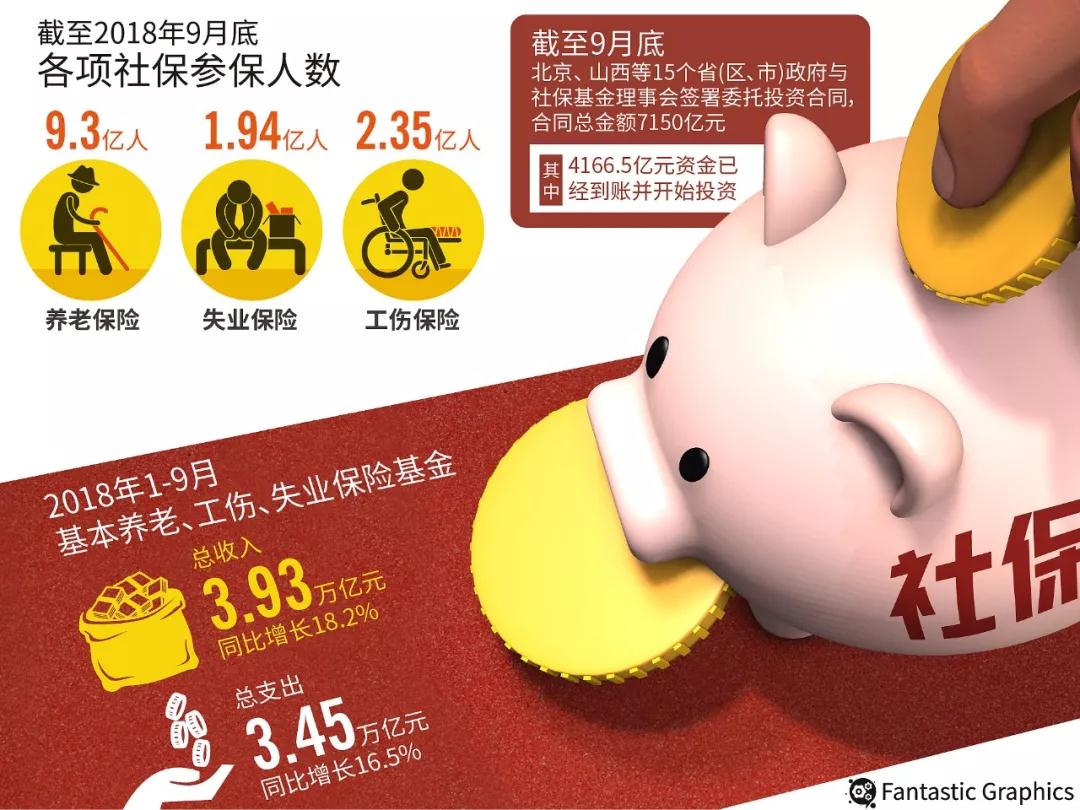
  On October 31, Lu Aihong, spokesperson of the Ministry of Human Resources and Social Security, said that the investment and operation of the basic old-age insurance fund for enterprise employees should be steadily promoted and the entrusted investment of the basic old-age insurance fund for urban and rural residents should be accelerated. By the end of September, the governments of 15 provinces (autonomous regions and municipalities) such as Beijing and Shanxi had signed entrusted investment contracts with the Social Security Fund Council, with a total contract value of 715 billion yuan, of which 416.65 billion yuan had been received and investment began.

  In 2015, the Measures for the Administration of Investment in Basic Endowment Insurance Funds was issued, which approved the endowment insurance funds to invest in the stock market for the first time. The measures stipulate that the proportion of investment in stocks, stock funds, hybrid funds and stock-based pension products shall not exceed 30% of the net asset value of pension funds.

  Pension investment in A shares is increasing.

  Like social security funds, pension funds are regarded as stable long-term investments, and the trend of positions is concerned by the market. With the completion of the disclosure of the third quarterly report of listed companies, the path of stock exchange is gradually clear. Judging from the data of the three quarterly reports just disclosed, the intensity of pension investment in A shares is increasing. According to the data of the third quarterly report this year, the number of pension holding accounts has increased to 15, holding 33 stocks, both in terms of the number of holding accounts and the number of holding shares, setting a record since the pension officially invested in the A-share market.

  For long-term funds entering the market, the CSRC has previously issued a statement saying that it encourages value investment, gives play to the role of institutional investors such as insurance, social security, various securities investment funds and asset management products, and guides more incremental medium and long-term funds to enter the market.

  The institution also pointed out that the combination of pension and capital market brings long-term stable incremental funds to the capital market, and the capital market also brings long-term preservation and appreciation of pension.

  According to Lu Aihong, spokesperson of the Ministry of Human Resources and Social Security, in the second half of the year, the Ministry of Human Resources and Social Security will work with relevant departments to formulate specific implementation measures for the central adjustment of the basic old-age insurance fund for enterprise employees, and start the disbursement of funds as soon as possible.

  At the same time, we will promote the investment and operation of basic old-age insurance funds by classification, accelerate the investment and operation of urban and rural residents’ old-age insurance funds and occupational annuity funds, further improve the level of social insurance management services, continue to fully implement the national enrollment plan, and focus on new employment and poor people, and implement accurate expansion.