Leading indicators show that the overall economic recovery in China is obvious.

  Xinhua News Agency, Beijing, March 31st Question: The leading indicators show that the overall economic recovery in China is obvious.

  Xinhua News Agency reporters Zhou Wenqi, Xin Guo and Zhang Wenjing.

  According to the latest data, the purchasing managers’ index (PMI) of China’s manufacturing industry was in the expansion range for the third consecutive month in March.

  According to the data released by the Service Industry Research Center of the National Bureau of Statistics of China and China Federation of Logistics and Purchasing on the 31st, the purchasing managers’ index (PMI) of manufacturing industry was 51.9% in March, which was 0.7 percentage points lower than that of the previous month and higher than the critical point, and the manufacturing industry kept expanding.

  "Affected by factors such as the high base last month, the manufacturing PMI declined in March, and the prosperity level was still the highest in the past two years. Among the 21 industries surveyed, 13 industries had higher PMI than last month." Zhao Qinghe, senior statistician of the Service Industry Research Center of the National Bureau of Statistics, said.

  This is the wharf of Taicang Port in Jiangsu Province (photo of drone) taken on March 13th, 2023. Xinhua News Agency reporter Li Boshe

  From October to December, 2022, China’s manufacturing PMI was 49.2%, 48% and 47% respectively, and it was in the contraction range for three consecutive months. In January 2023, it jumped to 50.1% and returned to the expansion range. In February, it climbed to 52.6%.

  Zhang Liqun, a researcher at the the State Council Development Research Center, said that since October last year, the manufacturing PMI has relatively quickly returned from threshold to the line of prosperity and decline. Although it fell back in March this year compared with February, 51.9% is still at a higher level on the line of prosperity and decline.

  "Although there is a slight fluctuation, the situation that the manufacturing PMI has been on the line of prosperity and decline for three consecutive months shows that the level of economic activity in China has continued to rise, the vitality of business entities has gradually increased, and the overall economic recovery trend is obvious." Zhang Liqun said.

  According to statistics, the PMI of large, medium and small enterprises in March was 53.6%, 50.3% and 50.4% respectively, all above the critical point.

  Zhao Xijun, co-dean of China Capital Market Research Institute of Renmin University of China, said that in the past, sometimes the manufacturing PMI was higher than 50%, but the performance of SMEs was poor. Nowadays, the PMI of large, medium and small enterprises is in the expansion range, indicating that the production and operation of various business entities are steadily recovering.
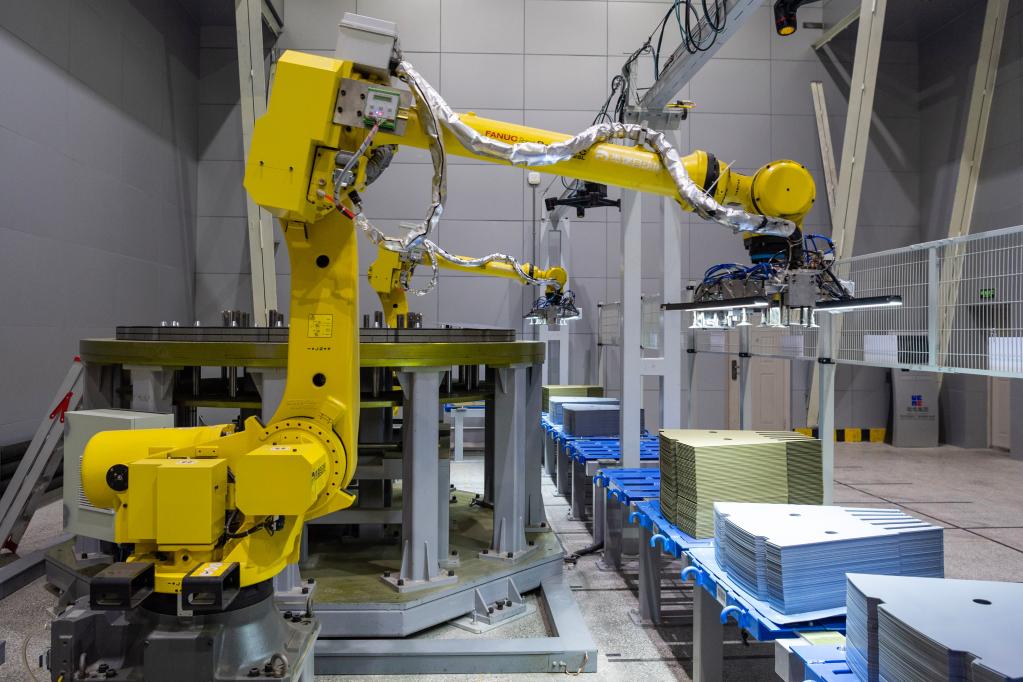
  On March 29th, in the production workshop of Harbin Electric Machinery Factory Co., Ltd. of Harbin Electric Power Group, the intelligent laminating robot was carrying out automatic operation. Xinhua News Agency reporter Xie Jianfei photo

  In addition, the production index in March was 54.6%, and the new order index was 53.6%.

  Zhao Xijun said that these two figures have reached a high level of prosperity, which not only shows that the manufacturing enterprises have increased their production tasks, started well, and the overall market has improved, but also shows that the policy of "stabilizing the economy and expanding domestic demand" is constantly showing results.

  The performance of non-manufacturing industry is even brighter. In March, the business activity index of non-manufacturing industry was 58.2%, up by 1.9 percentage points from the previous month, which was significantly higher than the critical point, indicating that the pace of recovery and development of non-manufacturing industry was accelerated.

  Zhao Qinghe said that from the perspective of industry, the business activity index of retail, railway transportation, road transportation, air transportation, leasing and business services is higher than 60.0%, indicating that residents’ willingness to consume and travel has increased recently, and the market activity of related industries has rebounded rapidly.

  Like the latest manufacturing PMI and non-manufacturing business activity index, many economic indicators released in March all showed an "upward curve", conveying the warmth and vitality of China’s economic recovery.

  In the first two months of this year, the total retail sales of consumer goods in China increased by 3.5% year-on-year. Investment in fixed assets increased by 5.5% year-on-year, 0.4 percentage points faster than the annual growth rate of last year; Total export value increased by 0.9% year-on-year & hellip; … The "troika" driving economic growth is in a steady trend.

  On February 28th, citizens were buying snacks at Sanse Road Night Market in Jinjiang District, Chengdu, Sichuan Province. Xinhua News Agency reporter Tang Wenhao photo

  Qunar. com statistics show that in the first three weeks of March, the number of flight bookings in several cities in China exceeded the same period in 2019; According to the monitoring data of the State Post Bureau, as of March 8, the express delivery business in China reached 20 billion pieces in 2023, 72 days ahead of 2019; According to data released by the People’s Bank of China, the scale of social financing increased by 3.16 trillion yuan in February, 1.95 trillion yuan more than the same period last year … … The activity of people flow, logistics and capital flow has been significantly improved.

  After raising the GDP growth forecast of China in 2023 from 5.2% to 5.5% in January, the investment bank Goldman Sachs recently raised the growth forecast to 6%.

  "The solid material and technical foundation for economic development, the rapid and stable transition of epidemic prevention and control, the appropriate and effective macroeconomic policies, and the increasing confidence of business entities have made China’s economy steadily pick up and continue to improve after the start of the year." Zhang Liqun said that China’s economy has steadily entered the track of recovery, and the prospect of recovery is relatively clear, and it is expected to get out of the economic growth curve of sustained recovery throughout the year.

  In 2023, China’s economic operation started well. Looking forward to the whole year, people in the industry believe that although China’s economic development is still facing pressure and challenges, with the gradual consolidation of the foundation of economic recovery and the continuous implementation of measures to stabilize the economy, it is expected to continue to recover to a good situation throughout the year.

The Internet crowdfunding project of China Red Cross Society’s 2023 "5.8 Humanitarian Day" was launched.

  On the occasion of the 76th World Red Cross Day, the Internet crowdfunding project "5.8 Humanitarian Public Welfare Day" initiated by China Red Cross Society and implemented by China Red Cross Foundation was officially launched in Beijing on the 7th. From May 7 to 9, the project spread the spirit of the Red Cross and mobilized humanitarian resources through crowdfunding of Internet public welfare projects, video of Red Cross stories and promotion of public welfare posters.

  According to Zhou Kuiqing, Deputy Secretary-General of China Red Cross Foundation, 391 public welfare projects were launched during the "May 8 Humanitarian Day" in 2023, focusing on emergency rescue and emergency rescue, rural revitalization and community development, humanitarian assistance and humanitarian care.

  In order to attract more people to understand, pay attention to and participate in humanitarian public welfare undertakings, a series of videos of original characters "Saving and Looking for Red" jointly created by China Red Cross Foundation have been released recently. The 32 videos tell the stories of the Red Cross from all over the country around the fields of humanitarian aid, emergency rescue, emergency rescue, organ donation, hematopoietic stem cell donation, voluntary service and rural revitalization.

  In addition, online activities such as "Let’s Go Together" donation, public question and answer, and live video will be held on platforms such as Weibo and Tik Tok during the event.

  This is the second year that the Red Cross Society of China has launched this activity. According to Sun Shuopeng, member of the Party Group and Vice President of the China Red Cross Society, during the "May 8 Humanitarian Day" last year, more than 1,000 Red Cross organizations participated, and 3.22 million donations were mobilized, with online and offline donations totaling more than 230 million yuan. (Reporter Dong Boting)

The first chip of fast-charging chip was listed: it sold 1.7 billion chips in three and a half years, and its customers included Xiaomi, OPPO, vivo and Samsung.

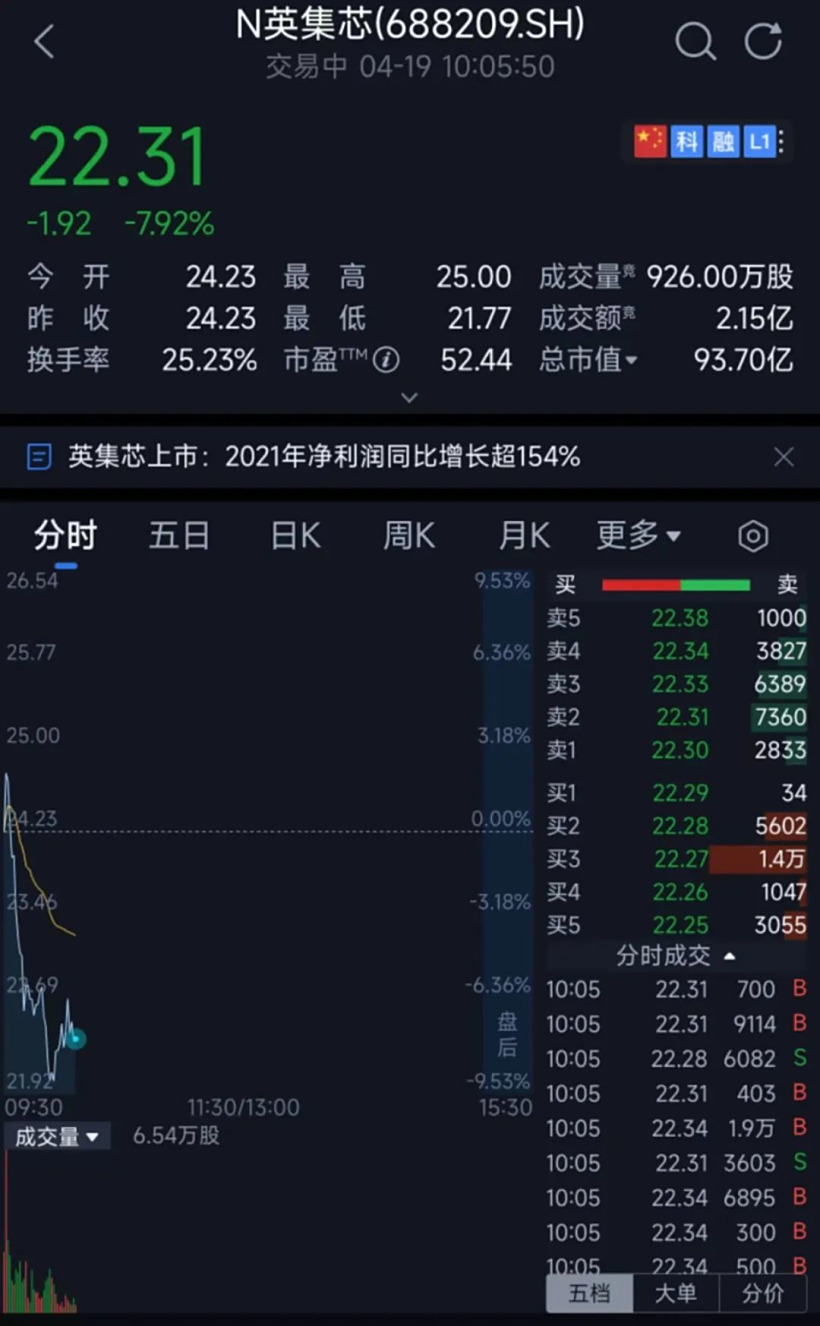
It was reported on April 19th that just now, the domestic digital-analog hybrid chip design company landed in science and technology innovation board, and its main business is power management and fast charging protocol chips, with an issue price of 24.23 yuan/share.

After the opening, the opening price of Yingjixin was 24.23 yuan/share, and then the share price fell, with the biggest drop of 9.5%. As of the date of writing, its share price is 22.31 yuan/share, down 7.92%, with a total market value of 9.3 billion yuan.

Founded in 2014, Yingjixin is currently one of the major chip suppliers in other application fields.

There are about 230 models of products generated by Yingjixin, which are used in mobile power supply, fast charging power adapter, wireless charger, car charger, TWS earphone charging bin and other products. From 2018 to the first half of 2021, its chip sales reached 1.728 billion, and the final brand customers included Xiaomi, OPPO and other manufacturers.

During the reporting period, the revenue of CIMC showed an increasing trend. The revenue of each period in 2018, 2019, 2020 and the first half of 2021 was.

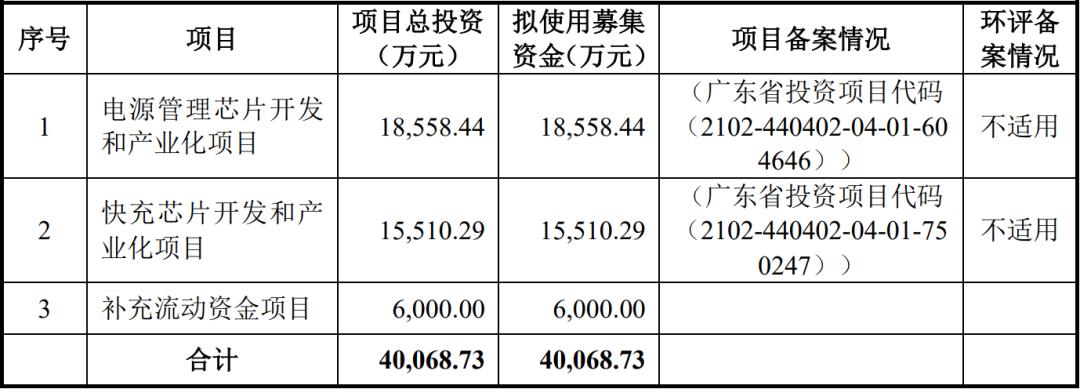
Yingjixin has no controlling shareholder, and the actual controller is Huang Hongwei, chairman and general manager of Yingjixin. In this IPO, CIMC plans to raise 400 million yuan, which will be used for three projects: development and industrialization of power management chips, development and industrialization of fast charging chips and supplementary liquidity.

Fund-raising situation of Yingxin Chip Plan

▲ Fund-raising of Yingji Core Program

Yingjixin was established on November 14th, 2014, when its shareholder was Qiu Fangfang. According to the prospectus, Qiu Fangfang was the spouse of Zeng Lingyu, a member of the founding team.

As the founding team is starting a business for the first time and there are many uncertainties, Qiu Fangfang is jointly selected as the nominal shareholder, and the trustees include 16 people including Huang Hongwei, Ding Jiaping and Zeng Lingyu.

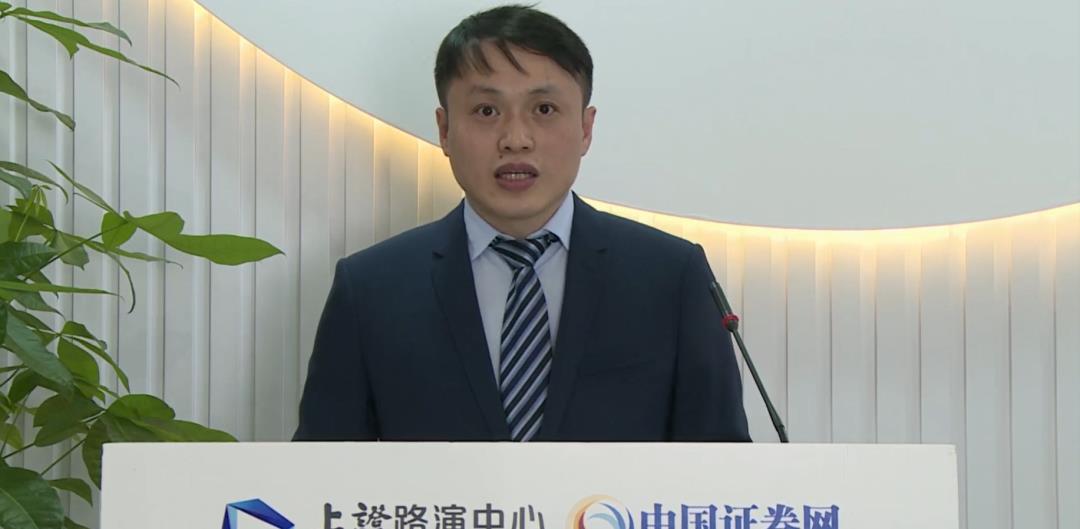
Huang Hongwei, Chairman and General Manager of Yingjixin

▲ Huang Hongwei, Chairman and General Manager of Yingjixin

It is worth noting that. Among them, LING HUI worked as general manager, general manager and senior vice president of the Internet of Things Division in China Resources Siwei Technology (Shanghai) Co., Ltd., Guangzhou Anbao Electronics Co., Ltd. and Shenzhen Bettler Electronic Technology Co., Ltd., and joined Yingjixin as technical director in July 2020.

Among the other four people, Huang Hongwei, Chairman and General Manager of Yingjixin, Dai Jialiang, Director of System R&D Department, Zeng Lingyu, Deputy Director of IC R&D Department, and Tang Xiao, Deputy Director of IC R&D Department, all worked together in Xinhengfu Technology, a subsidiary of Juli Integration and Fuman Electronics.

In 2013, 10 people, including Huang Hongwei, left Torch Power Integration and planned to start a business in the field of power management chips, but they lacked financial support. Fuman Electronics plans to enter the power management chip market through its Xinhengfu technology. So the two sides jointly created Xin Yiman, and Huang Hongwei and others joined Xinhengfu Technology.

After the establishment of Xinyi Man, the cooperation was finally terminated in October 2014, and the company was cancelled in June 2016.

However, this cooperation has also brought about a long-term lawsuit between Fuman Electronics and CIMC. Fuman Electronics, its subsidiaries Xinhengfu Technology and Liu Wenjun initiated six lawsuits against Yingjinxin, and there were disputes over intellectual property rights and technology patents with Yingjinxin.

According to a source quoted by Jiwei.com, in the fourth quarter of 2018, Fuman Electronics was optimistic about the advantages of Yingjixin in the charging treasure and wireless charging market, and planned to acquire Yingjixin. However, after the negotiations failed, Fuman Electronics began to dig people. The earliest lawsuit of Fuman Electronics against Yingjixin also began in November 2018.

At present, among the six lawsuits filed by Yingjixin, Fuman Electronics and Liu Wenjun, five lawsuits have reached a settlement, and the plaintiff has withdrawn the lawsuit and closed the case. The administrative lawsuit of Fuman was decided by Beijing Intellectual Property Court in January, 2022, which rejected the plaintiff’s claim of Fuman Electronic Litigation, and Fuman Electronic refused to accept it and filed an appeal. The case is still being accepted by the Supreme People’s Court.

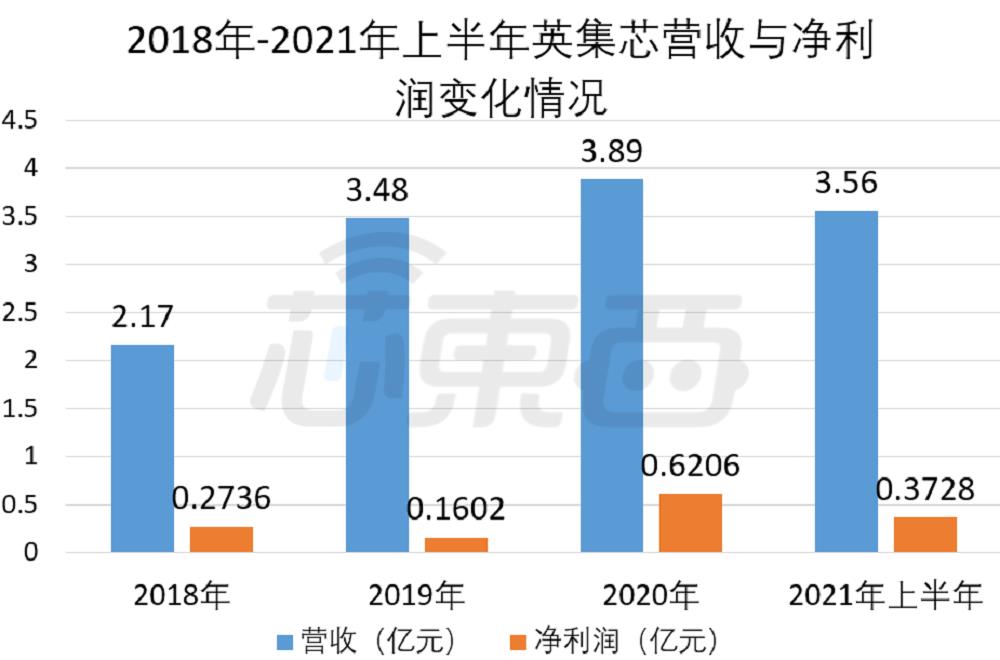
During the reporting period, the revenue of CIMC showed an increasing trend, with revenue of 217 million yuan, 348 million yuan, 389 million yuan and 356 million yuan in the first half of 2018 -2021 respectively, with a compound growth rate of 34.04% from 2018 to 2020.

In terms of profit, the net profit of Yingjixin in the first half of 2018 -2021 is.

Changes in revenue and net profit of CIMC in the first half of 2018 -2021

▲ Changes in revenue and net profit of CIMC in the first half of 2018 -2021.

The main source of revenue for CIMC is that from 2018 to 2020, the revenue of CIMC power management chips will increase from 194 million yuan to 268 million yuan.

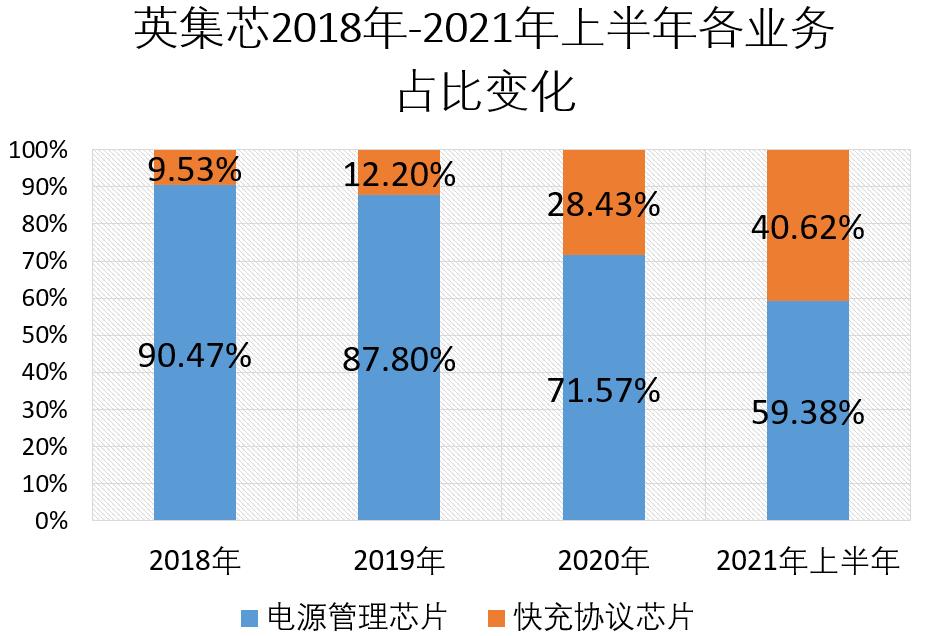
However, with the growth of its fast charging protocol chip revenue, its power management chip revenue ratio has dropped from more than 90% in 2018 to 59.38% in the first half of 2021.

Proportion of various businesses of CIMC in the first half of 2018 -2021

▲ Proportion of various businesses of CIMC in the first half of 2018 -2021.

From 2018 to the first half of 2021, the R&D expenses of Yingjinxin were 33.2275 million yuan, 44.2605 million yuan, 50.65 million yuan and 38.7085 million yuan, respectively, accounting for 15.34%, 12.72%, 13.01% and 10.88% of the operating income in the same period.

By the end of June, 2021, CIMC had a total of 61.48% employees. It has obtained 79 domestic patents, including 49 invention patents and 30 utility models. Yingjixin also owns 115 registration certificates of integrated circuit layout design and 11 computer software copyrights.

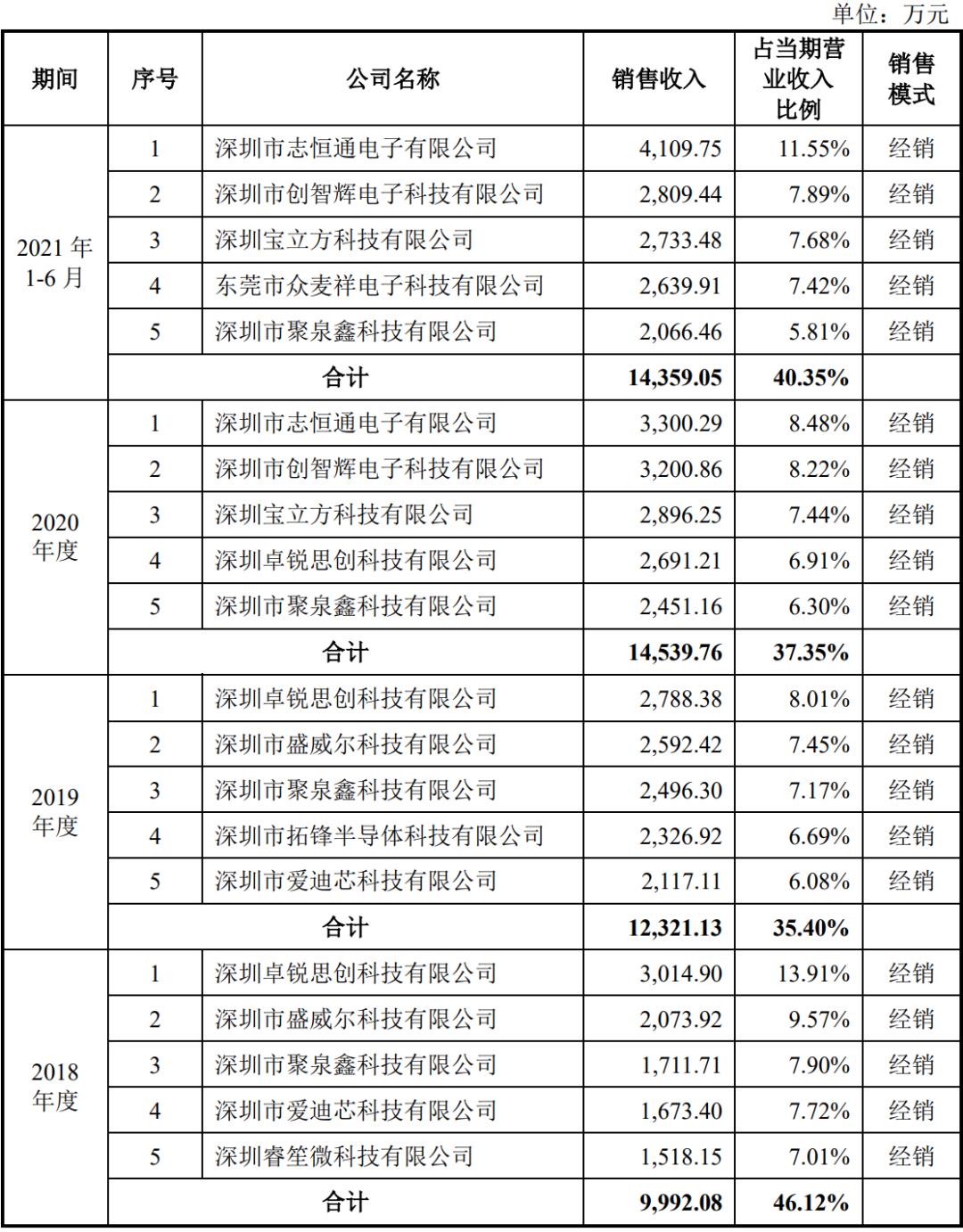
During the reporting period, the main customers of Yingjixin were basically stable, and most of them were dealers, including Shenzhen Zhihengtong Electronics Co., Ltd. and Shenzhen Zhuorui Sitron Technology Co., Ltd.. Through distributors, its ultimate brand customers are.

Top five customers of CIMC in the first half of 2018 -2021

▲ Top five customers of CIMC in the first half of 2018 -2021

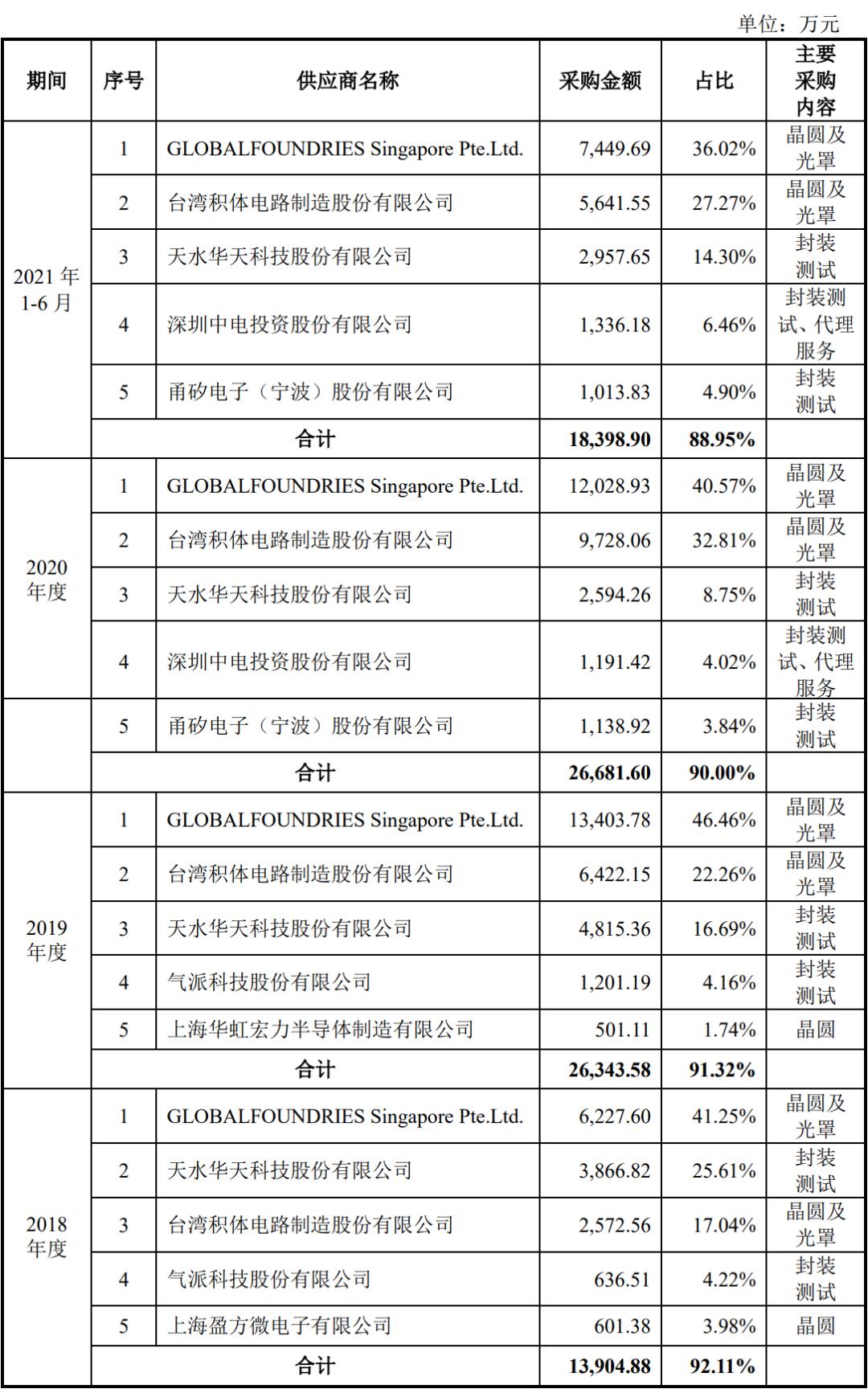
As a chip design company, the main procurement projects of CIMC include. According to the prospectus, the main wafer supplier of Yingjixin is, and the main supplier of packaging and testing services is Tianshui Huatian Technology.

Top five suppliers of Yingjixin

▲ The top five suppliers of Yingjixin

From the perspective of the whole industry, the global power management chip market is highly concentrated, and its market share is mainly occupied by international enterprises such as Texas Instruments, Infineon, Power Integrations and MPS.

At present, China power management chip companies such as Shengbang, Xinpengwei and Jingfeng Mingyuan have successfully landed in the capital market and gradually have a certain scale of operation. However, domestic manufacturers have a certain gap with international head manufacturers in market share and technical strength.

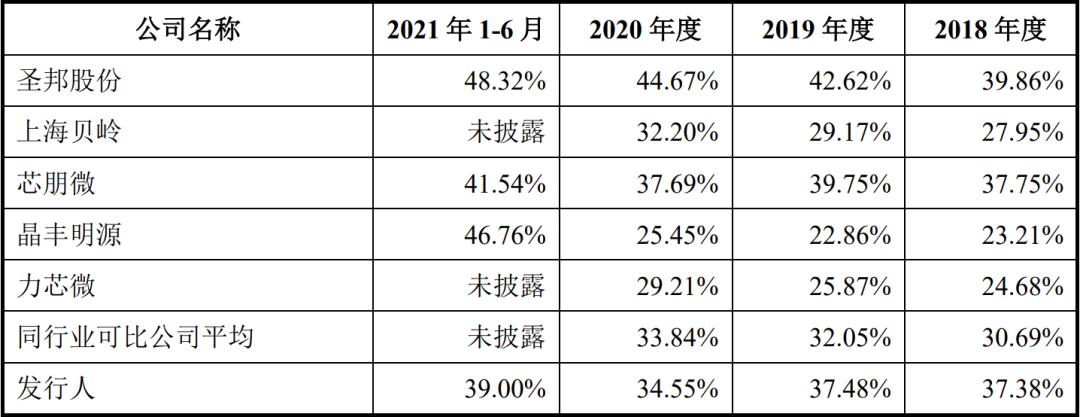
Market share of power management chips between Yingjixin and comparable companies in the same industry in China

▲ Market share of Yingjixin and comparable domestic companies in the same industry in power management chips.

According to the prospectus, there is a gap between Yingjixin and overseas famous brands in terms of business scale and overall technical strength. However, in the product field in which it focuses, the performance index of Yingjinxin products is similar to that of Texas Instruments, PI, Infineon and other corresponding products, and it reaches or even exceeds the products of overseas companies in the same industry in terms of integration, compatibility and the number of supporting agreements.

The power management chip of CIMC is mainly that this scheme adopts a single mixed digital-analog SoC chip, which can replace the functions that traditional digital and analog chips can achieve with a mixed digital-analog SoC chip.

Through this mixed digital-analog SoC integration technology, CIMC can integrate digital chips, analog chips, systems and embedded software into one SoC chip, shortening the development cycle of customers’ finished products and reducing production costs.

In terms of fast charging protocol chips, the products of Yingjixin have been authorized by mainstream platforms such as Qualcomm, MediaTek, Spreadtrum, Huawei, Samsung, OPPO, Xiaomi and vivo. Its products not only support all five kinds of fast charging protocols of domestic communication terminals,

Compared with domestic comparable companies in the same industry, the gross profit margin of Yingjixin is low, which is mainly related to the differences in product structure, functional positioning and application fields, according to the prospectus. Compared with the power management chips of comparable domestic companies in the same industry, the gross profit margin of power management chips of Yingjixin is in the middle-upper level.

Gross profit margin of power management chips of Yingjinxin and comparable companies in the same industry from 2018 to the first half of 2021.

▲ Gross profit margin of power management chips of Yingjinxin and comparable companies in the same industry from 2018 to the first half of 2021.

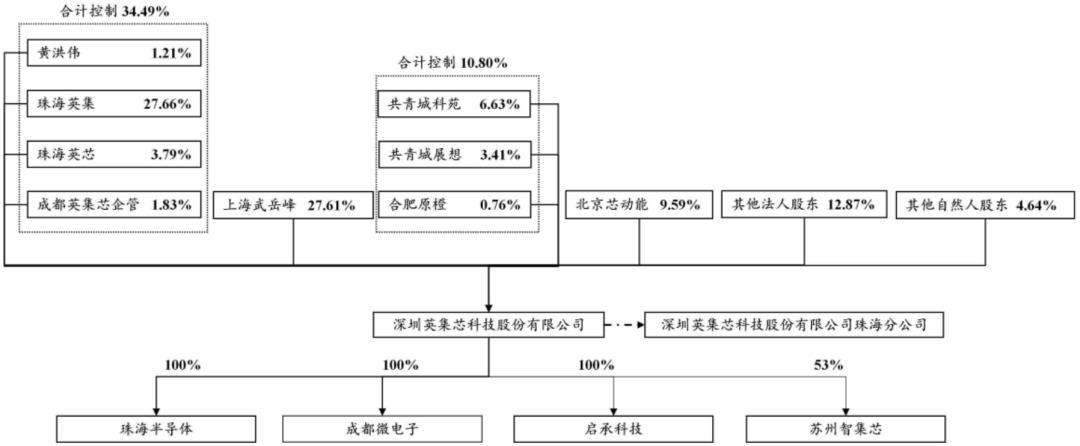
Due to the scattered equity, Huang Hongwei, its chairman and general manager, directly holds 1.21% of the shares of Yingjixin, and indirectly controls 33.28% of the shares through three employee stock ownership platforms: Zhuhai Yingji, Zhuhai Yingxin and Chengdu Yingjixin Enterprise Management, and controls a total of 34.39% of the shares.

Yingjixin equity structure

▲ Equity structure of Yingjixin

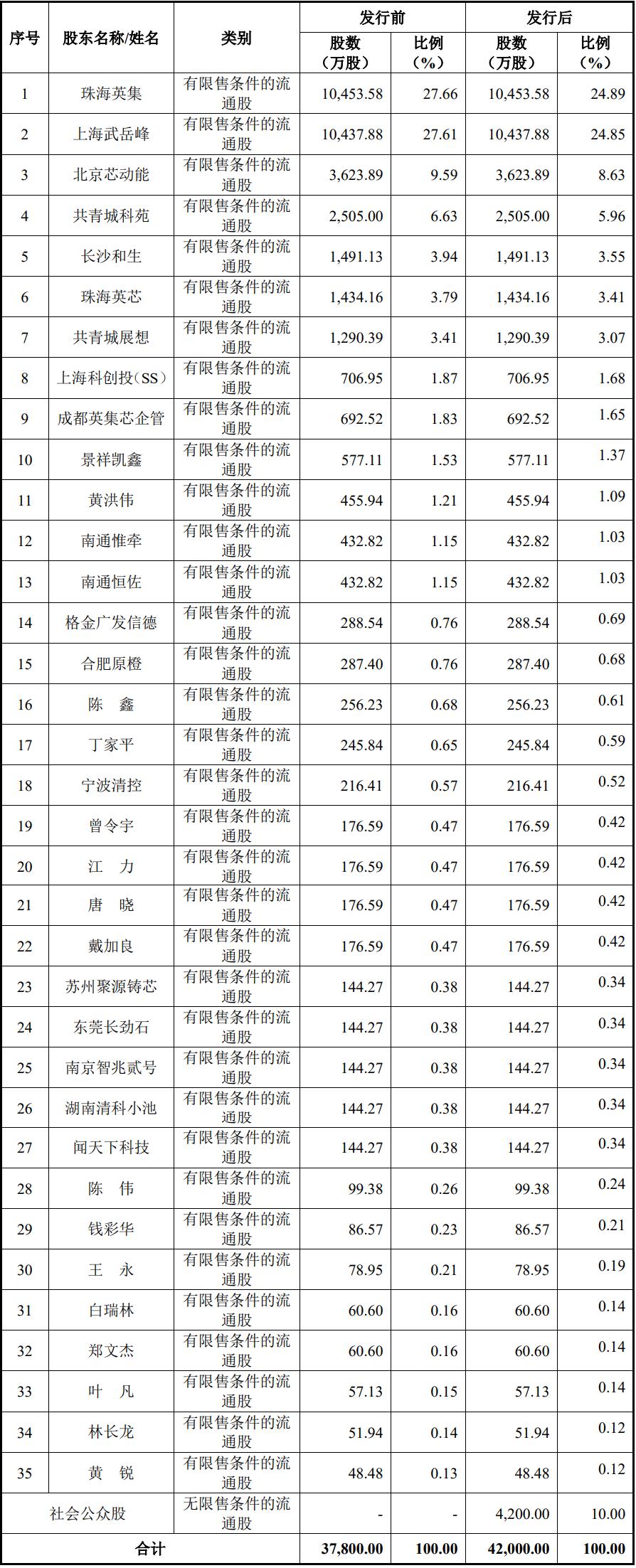
Shareholders who own more than 5% of the shares of Yingjixin include Shanghai Wuyuefeng, Beijing Core Kinetic Energy and Gongqingcheng Keyuan, with 27.61%, 9.59% and 6.63% of the shares respectively.

In addition, funds such as Shanghai Science Venture Capital and Suzhou Juyuan Casting Core also hold some shares of Yingjixin.

Share capital of Yingjixin

▲ Share capital of Yingji Core

The power management chip is a chip that is responsible for the transformation, distribution, detection and other control functions of the required electric energy in the electronic equipment system. It is the power supply center and link of all electronic products and equipment, and is an indispensable chip product in the fields of consumer electronics, automotive electronics and new energy.

At present, international leaders such as Texas Instruments and Infineon still dominate the power management chip market. At the same time of domestic chip substitution, domestic power management chip enterprises should carry out technological innovation to win domestic and even foreign market share. As a new domestic power management chip enterprise, Yingjixin’s products adopt mixed digital and analog chips which are different from the traditional ones, and its listing may help to increase the market share of domestic power management chips.

At present, with the rapid expansion of the power management chip market, many new chip companies have been founded or entered this field. If we can’t grasp the development trend and market dynamics of the industry, there are certain operational risks.